
Transparent polymer is as strong as aluminum
S. Himmelstein | April 08, 2019A lightweight and transparent plastic material with the mechanical strength of aluminum could be an ideal replacement for traditional and polymeric glass in automotive glazing, buildings and other applications. These properties were realized in a high-density polyethylene film by controlling process parameters during hot 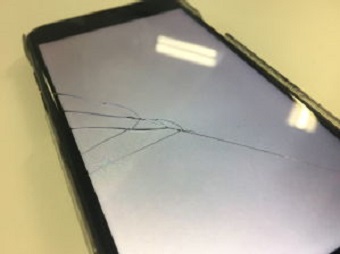 A lightweight, transparent plastic material with the mechanical strength of aluminum could be an ideal replacement for traditional and polymeric glass in many applications. Source: University of Warwickdrawing of polymer sheets.
Researchers from Queen Mary University of London, University of Warwick (U.K.), Nanoforce Technology Ltd (U.K.) and Eindhoven University of Technology (the Netherlands) tuned the drawing temperature during synthesis to yield highly oriented polyethylene films with a transmittance of about 90%. The transparent films possess a maximum Young's modulus of 27 GPa and a maximum tensile strength of 800 MPa along the drawing direction, both of which are more than 10 times higher than those of polycarbonate and poly(methyl methacrylate). These values also exceed those for aluminum while the film’s density, documented at 1000 kg/m3, is considerably lower than that of the metal (2700 kg/m3) or glass (2500 kg/m3).
Drawing in this context involves pulling the material under tension, generally at an elevated temperature to allow the molecules to be reoriented. The technique aligns strands of polymer molecules within the sheet and enhances the material’s mechanical properties. Drawing the polymer sheets at temperatures between 90° and 110° C afforded an optimal balance between strength and transparency.

This is great for weight reduction in automobiles. Glass is a fairly large contributor to vehicle weight, and reducing weight is the best way to improve both performance and economy.
A bonus, is this weight reduction is located well above the center of gravity.
Hope this makes it to market soon. It would be a great replacement for the Lexan windows in my race car.
Might this be good for spacecraft windows (redundants)? Or is there a problem with thermal expansion and contraction?
This is great news for the reasons stated above. Also, many modern cars use the windscreen to stiffen the chassis.
What is the scratch resistance and transmission of UV and IR light?
In reply to #3
I suspect that existing scratch-resistant and UV-blocking coatings could be applied to this material.