Sweet! Sugar-based arterial stent is 3D printed
S. Himmelstein | January 25, 2019Surgical suturing of arterial stents is a tricky, time-consuming task. Blockage can result if sutures are threaded through both the top and bottom wall of the artery.
Researchers from Harvard Medical School, Shiraz University (Iran), Allevi Inc. and University of Nebraska have 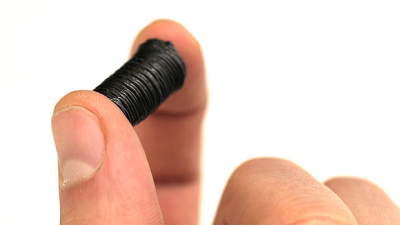 A prototype of the stent. Source: University of Nebraskaspun a sweet solution to simplify this procedure. A novel stent was 3D printed using a sugar-based material, enabling the device to dissolve within minutes of sealing an artery.
The resorbable stent is composed of dextran to impart flexibility and glucose to facilitate adhesion to arteries. Blood clotting is prevented by inclusion of sucrose and sodium citrate. Dissolving the sugar-based material in water, followed by baking to accelerate water evaporation, yields a molten ink suitable for printing. The stent dissolution rate can be tailored between four and eight minutes, and the devices can be sized for individual patients and to fit a range of different arteries.
The stent performed well when tested in a tubing rig designed to mimic an artery and in porcine arteries. The suturing procedure was completed in five minutes compared with the 15 minutes required using conventional surgical techniques. No leakage was observed, and the stent was dissolved as the flow of blood resumed.
The researchers believe such stents could be custom printed for individual patients in hospitals and operating rooms.