Scientists develop 3D-printed stents that can be reabsorbed by the body
Marie Donlon | February 11, 2021A team of scientists from ETH Zurich in Switzerland have developed a 3D-printed stent to repair injured main bronchi, or trachea, which can be reabsorbed by the body.
The team developed a digital light processing 3D printing technology wherein light-sensitive resins were used to construct the bioresorbable stents. Under ultraviolet (UV) light, two different macromonomers bound together to create the light-sensitive resin that is both flexible and bioresorbable.
In lieu of stents composed of metal and silicone — which require additional surgery for removal or realignment — the light-sensitive resin stents disappear, absorbed by the body, thereby eliminating the need for additional surgeries.
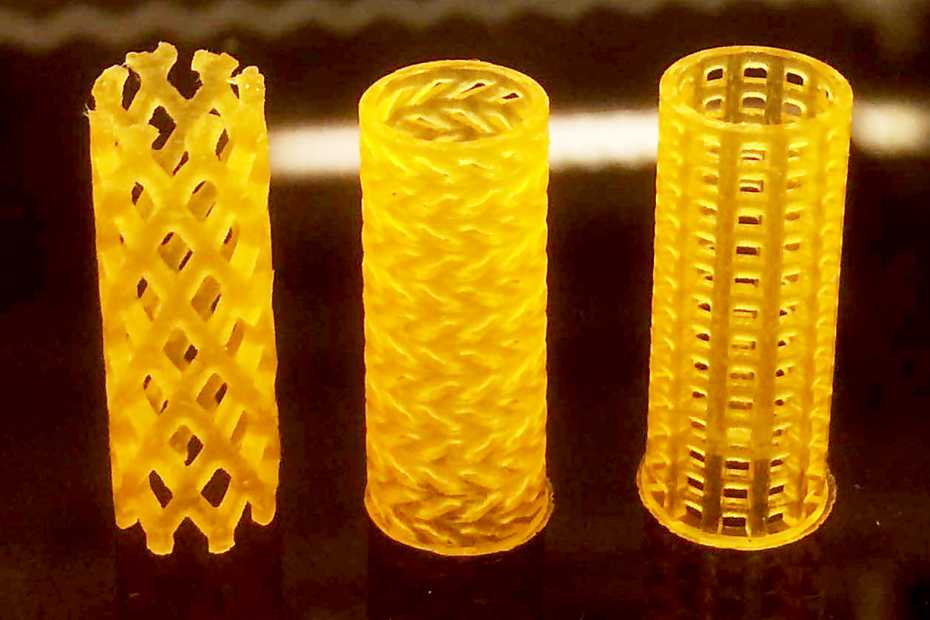 Three prototypes of the airway stents with different designs. Source: Paunovic N, et al.
The ETH Zurich team tested the stents on rabbits in the lab and discovered that six to seven weeks after implanting, the light-sensitive resin stent was reabsorbed into the rabbit’s body. Additionally, 10 weeks after implanting, the stents were no longer visible via X-ray.
Going forward, the researchers will look for gentle ways to implant the stents and to scale up manufacturing, which can only currently occur in the lab.