Spaceflight causes brain changes similar to aging
S. Himmelstein | January 25, 2019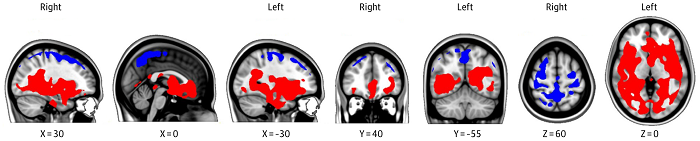 Preflight to post flight change in free water (FW) in astronauts’ brains. Source: University of Utah
The sustained periods of weightlessness experienced by some astronauts can take a toll on health. Impacts documented to date include eye pressure changes, weakened bones or impaired cognitive ability.
A recent assessment of brain scans obtained for 15 astronauts before and after spaceflight show changes to white matter in areas that control movement and process sensory information. The deterioration is similar to that expected with aging, but occurred in a much shorter time span. Seven subjects completed a space shuttle mission of up to 30 days duration and eight completed an International Space Station mission of up to 200 days.
Changes in the cerebellum were more pronounced for those whose missions were shorter, indicating that the brain may be able to adapt given enough time. Fluid around the brain pooled at the base of the cerebrum after spaceflight, so that astronauts’ brains were essentially floating higher in their skulls after their time in microgravity.
This phenomenon could be drawing extra cerebrospinal fluid into the subjects’ skulls and contributing to a condition called Spaceflight Associated Neuro-Ocular Syndrome, which involves kinking of the optic nerve, visual changes and flattening of the back of the eye.
Balance problems associated with white matter deterioration can self-correct after a few weeks back on Earth, but brain changes responsible for these issues may persist. The researchers plan to examine scans from six months after spaceflight to determine how long the changes last and how they relate to other post-flight health issues.
Scientists from the University of Florida, the University of Utah, the University of Texas Health Science Center, Harvard Medical School, 5KBRwyle (Texas) and NASA Johnson Space Center contributed to this research, which is published in JAMA Neurology.