A Tool for Converting Contaminated Lands into Renewable Energy Assets
S. Himmelstein | December 26, 2018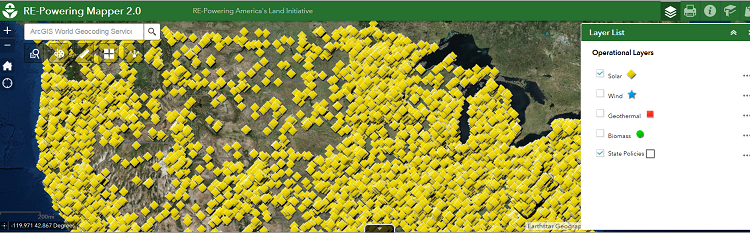 Source: EPA
Contaminated lands, landfills and mine sites can be sources of biogas and can also be redeveloped to host solar, geothermal and wind energy systems with the aid of an online mapping tool from the U.S. Environmental Protection Agency (EPA). The interactive RE (renewable energy)-Powering Mapper lets users visualize the agency’s information about RE potential on these lands.
Transforming such hazardous sites into energy assets provides new economic opportunity for communities by improving the local tax base, protecting open space and generating jobs. RE-Powering Mapper contains information on more than 130,000 sites screened for RE potential. These encompass 36,400 sites collected from EPA program databases, such as Superfund, Brownfields grantees and the Landfill Methane Outreach Program, and 97,500 sites collected from state programs in 17 partnering states. The system offers search options for state, acreage, renewable energy capacity and other site attributes, in addition to site-specific screening reports.
Resources recently added include a New Training Module, which educates stakeholders about the diverse land use considerations for pursuing RE projects on contaminated lands and landfills. Site control and ownership, liability concerns, site clean-up status and timeline, and environmental permitting requirements are covered. A Fall 2018 Benefits Matrix summarizes more than 200 reported benefits associated with completed RE-Powering projects. Commonly reported benefits include revenues from land leases and taxes, electricity cost savings associated with the reduced need to purchase power from the grid and reduced greenhouse gas emissions.