The Case for Ecoregion-based Conservation of Biodiversity
S. Himmelstein | November 08, 2018Distinct ecoregions such as forests and deserts host unique assemblages of species and should play a more prominent role developing cohesive conservation strategies. An evaluation of over 200 million observations of plants, animals and fungi provides strong evidence that ecoregions delineate terrestrial biodiversity patterns. Acknowledging that ecoregions meaningfully divide different types of communities allows scientists and decision 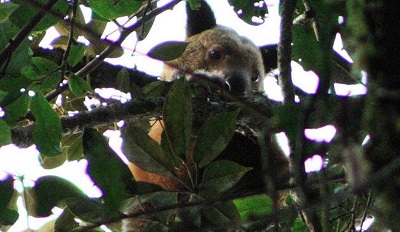 The first sighting of the tree kangaroo since 1928 was documented in summer 2018. Source: South West News Service/Michael Smith makers to think more critically about conservation plans for these realms.
Stanford University researchers weighed two competing theories: the sharp-transition hypothesis, positing that ecoregion borders divide differentiated biotic communities; and the gradual-transition hypothesis, proposing instead that species turnover is continuous and largely independent of ecoregion borders. Strong support for the sharp-transition hypothesis across all taxa was observed.
The researchers cite the recent observation of a Wondiwoi tree kangaroo, long presumed to be extinct, in Papua New Guinea. The report highlights the need to document more data on all species within an ecoregion to improve protective measures.
The findings could help better define conservation priorities and reinforce the importance of protecting habitats across as many ecoregions as possible. Ecoregion-based conservation planning can direct investments that simultaneously protect species-, community- and ecosystem-level biodiversity.