Plasma Electrolysis Produces Hydrogen from Wastewater
S. Himmelstein | October 18, 2018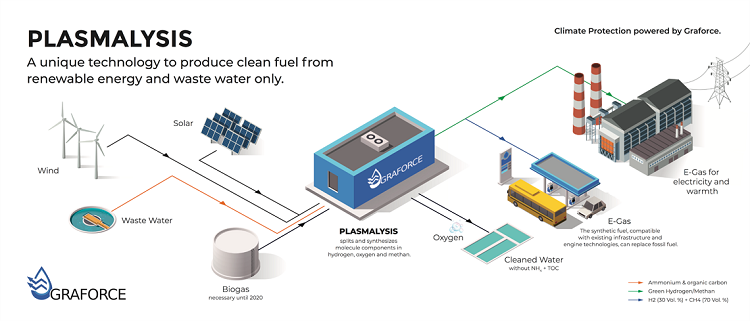 Schematic of the plasmalysis process. Source: Graforce GmbH
A plasma electrolyzer developed by Berlin-based Graforce Hydro GmbH is being applied to the efficient generation of hydrogen from industrial wastewater. The company currently produces hydrogen using plasmalysis technology in its demonstration plant.
Electricity from renewable energy sources is used to split wastewater obtained from biogas, sewage treatment and industrial plants into oxygen and hydrogen. Mixing hydrogen with biogas produces hydrogen-enriched compressed natural gas, a cost-effective, environmentally friendly fuel for vehicles that can also be tapped to generate electricity and heat. Wastewater pollutants are transformed into valuable energy while carbon dioxide, nitrogen oxide, carbon monoxide and hydrocarbon emissions are reduced by 30 to 60%. The process is also 50 to 60% less cost-intensive than conventional hydrogen production routes.
The new plasma electrolyzer technology is based on a change in the effect of radiation on matter. In a high-frequency plasma process, reactive species are produced as a result of electron-molecule interactions that initiate reactions at ambient temperatures that would otherwise only occur at significantly higher temperatures. This allows both dissociative electron attraction and dissociative excitations of process gases and water, along with plasma-chemical synthesis processes. The combined use of different plasma inductors is leading to a new crossover technology in the form of plasma processing.