
Nanoparticles Stop Snake Venom from Spreading in Bite Victims
Siobhan Treacy | October 05, 2018A new development from the University of California Irvine stops snake venom from inflicting symptoms in bite victims. Researchers developed nanoparticles that bind to snake venom toxins before they start to spread.
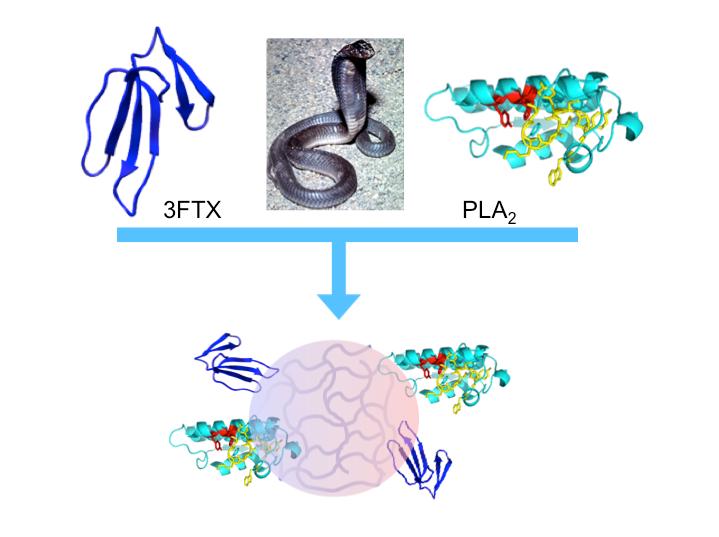 Synthetic polymer nanoparticles bind elapid snake venom toxins and inhibit venom-induced dermonecrosis. Source: Shea, et al.
The current treatment for venomous snake bites is to administer immunoglobulin G (IGG) into the bloodstream. This remedy is effective, but it has some downfalls. It must be delivered very quickly after a snake bite by a trained healthcare professional. The victim must get to a hospital immediately after being bitten, which is more difficult since snake bites typically occur away from urban or town centers. Certain snake venoms are not neutralized by IGG, as well.
The new nanoparticle-based method was developed to bind phospholipases A2 (PLA2) and three-finger toxin (3FTX), the main toxins found in the venom of the Elapidae snake family. The nanoparticles were tested on the venom of Naja nigricollis, or the black-necked spitting cobra. This kind of venom can create permanent tissue damage if left untreated for too long. Mice were first injected with the venom and then injected with varying levels of the nanoparticles. The nanoparticles proved to bind the venom and stop its spreading as well as side effects.
This method is a huge advancement in snake venom treatment. The nanoparticles don't have to be administered by a healthcare professional in a hospital. Instead, the nanoparticles could be administered on-site to stop the venom from spreading, and then the victim can proceed to the hospital for further treatment with a better prognosis. Currently, there are 100,000 deaths and 400,000 serious injuries from dangerous snake bites, annually.
"The stable, low-cost nanoparticles have the potential to be administered subcutaneously immediately after the bite at the site of envenoming by this spitting cobra to halt or reduce the extent of local damage and mitigate the systemic distribution of toxins post-envenoming," the researchers said.
The paper on the new venom fighting nanoparticles was published in the PLOS Neglected Tropical Diseases journal.



really a boon to rural folks