
Large-Scale Wind Farms May Warm Average Surface Temperatures More Than Previously Thought
Peter Brown | October 04, 2018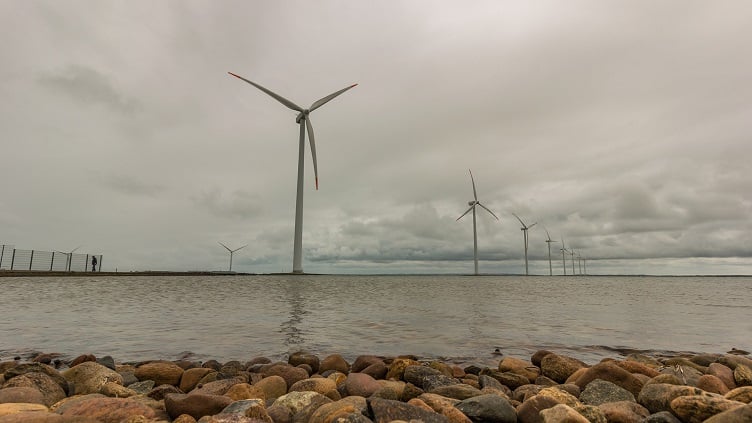 Wind power may need five to 20 times more land for large-scale deployment than previously thought. Source: Pixabay
The world is currently transitioning toward low-carbon energy sources in order to combat the effects of climate change.
Emerging studies are now measuring the pros and cons of each type of renewable energy and its own impacts on the environment compared to coal and gas.
One such study from Harvard University found that wind and solar power in the U.S. would require five to 20 times more land area than previously thought. Because of this, if such large-scale wind farms were built, it could warm average surface temperatures over the continental U.S. by 0.24° C.
"Wind beats coal by any environmental measure, but that doesn't mean that its impacts are negligible," said David Keith, the Gordon McKay Professor of Applied Physics at the Harvard John A. Paulson School of Engineering and Applied Sciences (SEAS). "We must quickly transition away from fossil fuels to stop carbon emissions. In doing so, we must make choices between various low-carbon technologies, all of which have some social and environmental impacts."
Previous research into large-scale wind farms concluded that real-world wind power generation has been overestimated because it didn’t factor in the interactions between turbines and the atmosphere. Each turbine creates a “wind shadow” behind it where air has been slowed down by the turbine’s blades. Commercial-scale wind farms are careful to space turbines to reduce the impact of these wind shadows but to expand for demand wind-driven electricity increases, interactions and associated climatic impacts can’t be avoided, researchers said.
Recent information from the United States Geological Survey revealed the location of 57,636 wind turbines around the U.S. Using this information combined with other government databases, researchers were able to quantify the power density of 411 wind farms and 1,150 solar photovoltaic plants operating in the U.S. during 2016.
"For wind, we found that the average power density — meaning the rate of energy generation divided by the encompassing area of the wind plant — was up to 100-times lower than estimates by some leading energy experts," said Lee Miller, a postdoctoral fellow at Harvard. "Most of these estimates failed to consider the turbine-atmosphere interaction. For an isolated wind turbine, interactions are not important at all, but once the wind farms are more than five to 10 kilometers deep, these interactions have a major impact on the power density."
The research suggests that not only will wind farms require more land area to hit the proposed renewable energy targets, but at such a large scale they would also become an active player in the climate system.
What they found supported more than 10 other studies that observed warming near operational U.S. wind farms. Researchers said they compared their simulations to satellite-based observational studies in North Texas and found roughly consistent temperature increases.
Researchers found that the warming effect in the continental U.S. caused by wind turbines is actually larger than the effect of reduced emissions for the first century of its operation. This is because the warming effect is predominantly local to the wind farm, while greenhouse gas concentrations must be reduced globally before the benefits are realized.
"The work should not be seen as a fundamental critique of wind power," said Keith. "Some of wind's climate impacts will be beneficial — several global studies show that wind power cools polar regions. Rather, the work should be seen as a first step in getting more serious about assessing these impacts for all renewables. Our hope is that our study, combined with the recent direct observations, marks a turning point where wind power's climatic impacts begin to receive serious consideration in strategic decisions about decarbonizing the energy system."
The full research can be found in the journal Joule.




Note, and important part of the summary of this paper has been left out of this rereport....
"... Warming effect strongest at night when temperatures increase with height
•
Nighttime warming effect observed at 28 operational US wind farms ...."