Lockheed Martin Wants to Train Robots to Oversee 3D Printing
Peter Brown | October 03, 2018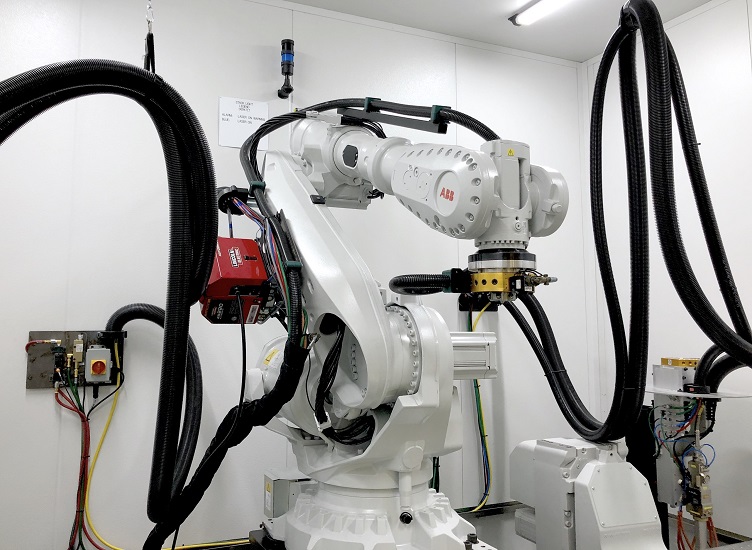 Using robots to monitor 3D printing would improve the quality and efficiency of the parts made. Source: Lockheed Martin
Additive manufacturing, better known as 3D printing, has been used to make parts for ships, planes, automobiles, spacecraft, housing, guns and even a dog’s skull.
However, according to Lockheed Martin, 3D printing requires a lot of babysitting, needing constant monitoring to make sure the part gets made right -- if a section is printed below par, it makes the whole part unusable.
In an effort to make additive manufacturing easier, Lockheed Martin is teaming with the Office of Naval Research to explore how to apply artificial intelligence to train robots to oversee the 3D printing of complex parts.
The Office of Naval Research contract, valued at $5.8 million, would run two years and examine how multi-axis robots that use laser beams to deposit material could be used with sensor modifications and software models to build better components.
"We will research ways machines can observe, learn and make decisions by themselves to make better parts that are more consistent, which is crucial as 3D printed parts become more and more common," said Brian Griffith, Lockheed Martin's project manager. "Machines should monitor and make adjustments on their own during printing to ensure that they create the right material properties during production."
The company will apply machine learning techniques to 3D printing so it can be monitored and controlled by the robot during fabrication.
Researchers will apply machine learning techniques to additive manufacturing so variables can be monitored and controlled by the robot during fabrication.
"When you can trust a robotic system to make a quality part, that opens the door to who can build usable parts and where you build them," said Zach Loftus, Lockheed Martin Fellow for additive manufacturing. "Think about sustainment and how a maintainer can print a replacement part at sea, or a mechanic print a replacement part for a truck deep in the desert. This takes 3D printing to the next, big step of deployment."
The teams will start to verify and integrate the robotic 3D-printing system in the common titanium alloy, Ti-6AI-4V, and integrating the related research with seven industry, national lab and university partners.