MIT Media Lab Project Aims to Replace Politicians with Artificial Intelligence
Abe Michelen | April 16, 2018César Hidalgo, director of the Collective Learning Group at the MIT Media Lab, is working on one disruptive, ambitious and avant-garde project. Its aim is to eliminate the politicians from politics, so national and local decisions can instead be made by artificial intelligence systems.
Last week Hidalgo presented this initiative at a TED Talk, where it has been labeled as a kind of "artificial democracy." It proposes to break with all that we know about democratic systems.
"Today it is not surprising that there are many people who are disillusioned with democracy, people almost do not vote anymore. During the past 30 years, the participation rate in the world of presidential elections shows an average of 67%. That is, only two-thirds of the people vote for president, " he reflects.
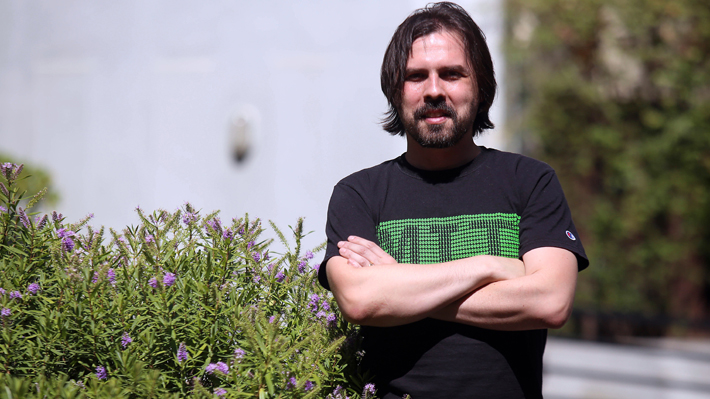 Cesar Hidalgo. Source: MIT
"Democracy has been captured, news is full of examples - like Cambridge Analytics -, where psychometric profiles of people are generated to carry out personalized advertising, change the opinion of voters, or induce them to support a certain candidate. Democracy is centered in the idea that people have to exercise power, but because people can’t exercise power directly, a representative is elected, and that representative is a bottleneck in the system,” explains Hidalgo.
The leaders of the MIT lab began to work in the search for technologies to allow political participation to occur through an artificial agent. The group sees the future as one where each person has a "personalized senator" that is not a person but an agent of artificial intelligence that knows about a person's reading habits, interactions in social networks and personality test. This information allows the senator to represent him or her whenever legislation is going to be voted on.
Hidalgo assures that this kind of avatar senator will check the new legislation with the person's data and will deliver an accurate verdict on how he or she would vote, although the long-term idea is that people can put the system on autopilot to continue making decisions for them.
He is currently in the phase of getting partners and financiers to carry out the project.
"My idea is to make a version of this Artificial Democracy, but also to stimulate other versions in other parts of the world. If after the TED talk there is, for example, a group in Holland that is enthusiastic about the idea and a different version is suggested, I find it as a win-win," he concluded.