Newly Developed Metal Alloy for Bone Implants has the Same Elasticity as Human Bones
Siobhan Treacy | March 23, 2018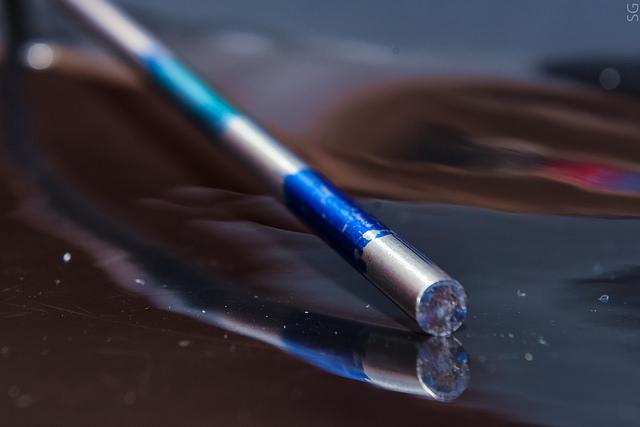 These are elastic metal rods. Source: NUST MISIS
A newly developed alloy processing technique produces solid and durable implants that are perfect for the human body. This new technique was developed by NUST MISIS scientists and researchers from Ecole de Technologie Superiore in Montreal, Canada.
The team set out to develop technology that can produce metal rod stocks better than the ones typically used in bone implants today.
The new alloys developed are created out of Ti-Zr-Nb. This material has a high functional complex superelasticity.
The scientists say that the alloys are super promising for metallic biomaterials because they have a combination of biochemical and biomechanical properties that makes it different from the other materials currently used. Ti-Zr-Nb has a biocompatibility that has high corrosion resistance and maintaining hyperelasticity that is similar to typical bone behavior.
”Our method of combined thermomechanical processing of alloys — in particular, radial-displacement rolling and rotary forging — allows researchers to get the highest quality blanks for biocompatible implants by controlling their structure and properties. Such processing of blanks gives them an outstanding resistance to fatigue and overall functional stability” said Vadin Sheremetyev, senior research associate from NUST MISIS and a research author.
While the rods are not yet widely used, the researchers already have a manufacturer who is interested. A Russian manufacturer of medical products is an industrial partner of NUST MISIS’ project who wants to team up with the researchers and develop a technology that uses the beams for spinal transpedicular fixation. They believe that this should improve therapy quality in patients who have scoliosis.
The paper on this research was published in the Journal of Alloys and Compounds.