
New Transportation Valve Technology Produces Cheaper, Environmentally Friendly Engines
Siobhan Treacy | March 21, 2018University of Waterloo researchers have developed new technology that gives internal combustion engines a big upgrade. This new tech is a cheap and reliable way to increase the efficiency of these engines by 10 percent while making the engines more environmentally friendly.
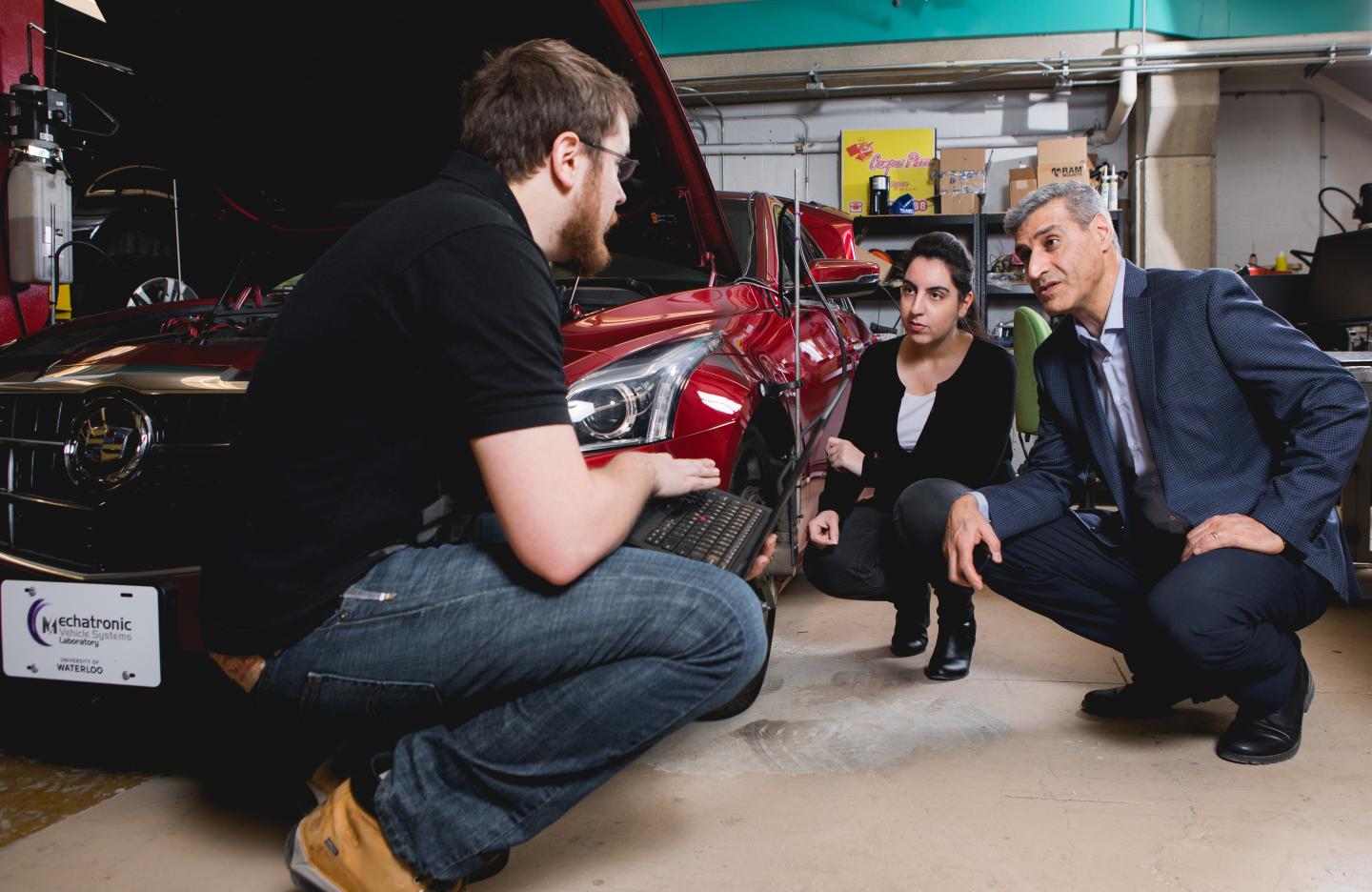 This is a photo of new valve technology that promises cheaper, greener engines, Amir Khajepour, a professor of mechanical and mechatronics engineering at Waterloo, in his lab working with his students (Source: University of Waterloo)
The technology, part of a decade of research, is a patented system for opening and closing valves that could reduce fuel consumption in all different kinds of transportation.
"This method has the potential to bring the well-established benefits of a fully variable valve system out of the lab and into production engines because cost and complexity aren't issues," said Amir Khajepour, a professor of mechanical and mechatronics engineering at Waterloo.
In internal combustion engines, intake and exhaust valves are usually controlled by cam mechanisms. These mechanisms don’t allow for the opening and closing of the valves to be varied.
The Waterloo tech removes the cams and replaces them with hydraulic cylinders and rotary hydraulic valves. These additions allow for variable timing that is relative to the speed and torque of an engine change.
Opening and closing valves at a specific time relative to the engine operation is a major part of increasing the fuel efficiency of an engine while reducing costs and greenhouse gas emissions.
"If you think about an ideal solution, it is to make the motion of the valve completely controllable," said Khajepour, who is also a Canada Research Chair and director of Waterloo's Mechatronic Vehicle Systems Lab. "That gives you infinite options to work with."
There are already valve timing systems that exist, but they are really only on experimental engines because they are expensive and complicated. These engines have only been developed in labs and not actually used in the real world.
The Waterloo technology has been the up-and-coming tech that could be used in engines for power generation, mining vehicles, trucking industry, consumer cars and more. It could significantly reduce the carbon footprint of vehicles during the transition from those that rely on gas for fuel to electric cars and cleaner transportation that is coming in the not-so-distant future.
This study was published in Mechatronics.

".... This is a photo of new valve technology..."
Wow. I could swear that is a picture of three people squatting down beside the front quarter panel of a passenger car.