MIT Program Opens New Doors to Refugees
Tony Pallone | January 31, 2018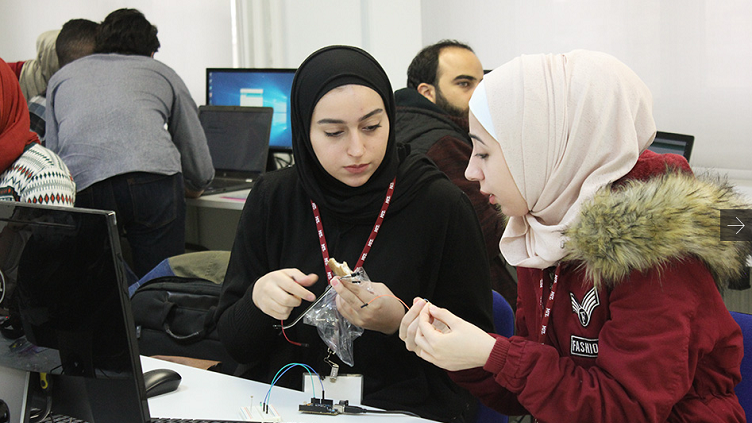 Students in the ReACT Program begin their year-long course of studies. Source: Lauren Benner/MIT ReACT Program Coordinator.
Last week in Amman, Jordan, a class of 18 students — half of them refugees — began a one-year course of study in computer science and entrepreneurship. Part of the Refugee Action (ReACT) Certificate Program that grew out of a global challenges competition at MIT, the program will include internships with local companies and could help attendees secure better-paying jobs.
It begins with an intensive two-week session of in-person lectures in innovation, design and entrepreneurship, led by MIT faculty members and students. Students work both individually and in teams to complete activities that include using a maker lab, working with coding architecture, and participating in design and innovation workshops, soft-skills seminars and industry panels. The remainder of the program will be comprised of a series of online classes through MITx and internships of approximately 20 hours per week with companies in the region.
About 500 people, from 20 nations, applied to take part in the program’s initial offering. Because displaced persons can struggle to get access to records, applicants were not required to submit transcripts or standardized test scores but were given special tests in math and English instead. They also submitted videos describing what they would do if they were offered an investment of $100,000.
According to executive director Robert Fadel, the need for a program like ReACT is great. He notes figures from the UN High Commissioner for Refugees that indicate only about 1 percent of refugees have access to higher education, compared to a global average of 34 percent. As he sees it, this means that “hundreds of thousands of university-qualified students are unable to realize their potential.”
The 18 students selected for the initial class came from four areas: Jordan, Syria, Lebanon and the Occupied Territories. Fifty percent are women. Moving forward, Fadel says that he hopes to see the program expand in terms of both number of students accepted and locations where it is offered.
The ReACT Program, he says, will “bring an MIT-caliber education to refugees and other displaced populations, where they live.”