Silica Filter Designed to Cut Power Plant Water Use
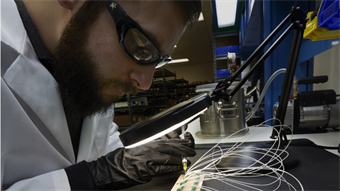
S. Himmelstein | October 21, 2017 Researchers demonstrated how hydrotalcite can filter silica out of cooling tower water at power plants. Source: Randy Montoya
A filter developed at U.S. Sandia National Laboratories targets the largest consumer of freshwater in the country: power plants. The power sector accounts for more than 50 percent of the nation’s freshwater use at about 500 billion gallons daily.
Freshwater recycling is currently practiced at power plants, but the number of times a batch of water can be reused is limited by the silica accumulating with each cycle. The buildup forms scale on turbines and other equipment and incurs high operating expenses. The high price of current silica removal methods renders the cost to treat and reuse water at power stations to be an estimated 1.5 to 2 times the cost of freshwater.
The new filter reduces the amount of freshwater required at power plants by increasing the number of times cooling tower water can be reused and recycled. Past research demonstrated that hydrotalcite removes about 90 percent of accumulated silica in recycled water and could be reused for five or more cycles. As water contacts the material, silica crystalizes and remains in the filter, leaving clean water for reuse.
The research team designed the hydrotalcite material to be used to filter cooling tower water at power plants. During the cooling process, some of the water evaporates and the minerals in the water, including silica, build up with each cycle.
Scale-up and economic analyses were conducted to provide power plant operators with estimated cost and energy savings, including projected lifetime savings associated with hydrotalcite filter use.