Using 3D Printing to Train Surgeons to Reduce Surgery Times
Peter Brown | August 03, 2017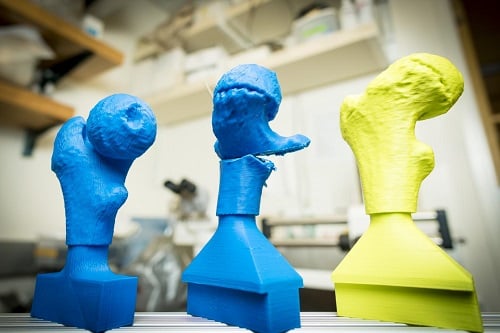 Engineers used CT scans to 3D print custom-made hip joints for surgeons to practice on before surgery. Source: UCSDResearchers from the University of California, San Diego and pediatric orthopedic surgeons are using new 3D printing techniques to help train surgeons and shorten surgeries for the most common hip disorders found in children ages 9 to 16.
The team was able to 3D print a model of a patient’s hip joint to cut by about 25 percent the amount of time needed for surgery when compared to a control group.
"Being able to practice on these 3D-models is crucial," says Dr. Vidyadhar Upasani, pediatric orthopedic surgeon at Rady Children's and UC San Diego.
Researchers conducted a study of 10 patients. Five patients’ hips were molded in 3D printing before surgery while the other five did not use models. Two surgeons operated on a different group of five patients without using models. In the group where models were used for practice, surgeries were 38 to 45 minutes shorter compared with the two control groups.
According to researchers, the time savings could translate into at least $2,700 in savings per surgery with each model for each surgery costing around $10.
The results of the study were so positive that Rady Children’s orthopedics department bought its own 3D printer. "I've seen how beneficial 3D models are," Upasani says. "It's now hard to plan surgeries without them."
Slipped capital femoral epiphysis is where the femur slips along the bone’s growth plate, deforming it. The surgery corrects the femur back into its normal shape and restores hip function. The condition impacts about 11 out of 100,000 children in the U.S. each year.
In a traditional surgery, physicians study X-rays of the surgery taken from different angles. Using 3D printing, CT scans of the patients’ pelvis create a computerized model of bone and growth plate for the printing process. The models then allow surgeons to practice and visualize the surgery before the operation.
Engineers settled on a honeycomb-like structure to mimic bones for their models. The printing process took four to 10 hours each to print.