The Search for Wonder Materials Beyond Graphene Continues
Siobhan Treacy | May 31, 2017Graphene is a major material currently on the market that has been a high-demand product since its discovery in 2004, with demand reaching an all-time high in 2010. The discovery of this material changed the way that electronics are created and even went on to win the researchers a Nobel Prize in Physics. Researchers are now attempting to go beyond graphene to find the next wonder material. They want to prepare other 2-D films with similar properties to graphene to be used in wearable electronics, sensors and energy storage.
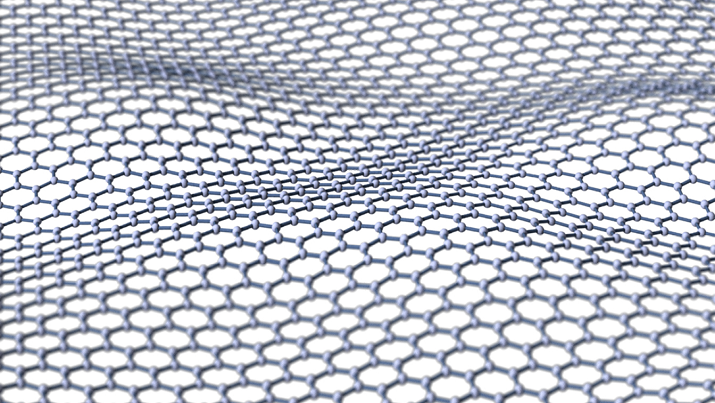 Graphene, the material researchers want to beat in their search for the new wonder material (ExtremeTech)
Chemical & Engineering News's senior correspondent and lead author of the article describing the research, Mitch Jacoby, says that most 2-D materials generally have these features in common: flexibility, transparency and the ability to be tuned easily. The bulk counterparts to these 2-D materials perform worse in all of those areas. The new materials could range from electrical conductors to insulators and semiconductors.
There are some questionable areas about 2-D products. What does 2-D mean? How many layers thick can they be? Does the material have to be free standing or can it perform well with others?
Researchers aim to answer these questions in the near future through their ongoing research. But for now, they are not slowing down to answer them. They are continuing to research and create new materials and ultra-thin films that could be the next wonder material. The new films fall into five general electronic component groups: MXenes, Xenes, organic materials, transition metal dichalcogenides and nitrates. While the materials are all in different stages of development and research, the laboratory team is very curious to demonstrate the materials on devices.
An article on this research was published in Chemical & Engineering News here.