
Can Diamonds Succeed Where Silicone Fails?
Tony Pallone | May 19, 2017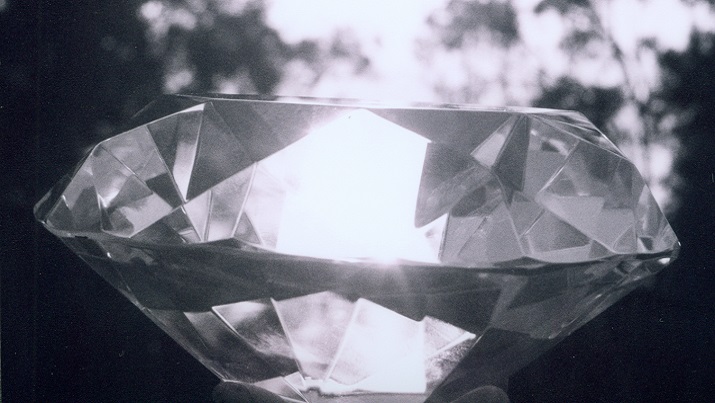 (Source: FreeImages.com/Candice Courtney)The fundamental building block of modern electronic devices is, of course, the transistor. Since most transistors are silicon-based, silicon technology has been the primary driver of the computer revolution. But there are significant limitations to silicon in some applications, including use in high-power electronics, or harsh environments such as the engine of a car or under the cosmic ray bombardment of outer space.
In a recent paper published in Applied Physics Letters, researchers led by Yasuo Koide, a professor and senior scientist at Japan’s National Institute for Materials Sciences, describe new work developing transistors that are based on a much more durable material: diamonds.
"Manufactured diamonds have a number of physical properties that make them very interesting to researchers working with transistors," Koide says. "Not only are they physically hard materials, they also conduct heat well which means that they can cope with high levels of power and operate in hotter temperatures. In addition, they can endure larger voltages than existing semiconductor materials before breaking down."
Using a technique known as electron beam evaporation, the researchers deposited yttrium oxide (Y2O3) insulator directly onto the surface of the diamond to form the transistor gate – the insulated terminal whose input voltage determines whether or not the transistor will conduct electricity. According to Jiangwei Liu, another of the paper’s authors, yttrium oxide has many desirable qualities, including high thermal stability, strong affinity to oxygen and wide band gap energy, contributing to its insulating capabilities.
Through future research projects, the team hopes to refine its understanding of electron movement through the diamond transistor. "Ultimately, our team's goal is to build integrated circuits with diamonds," Koide said. "With this in mind, we hope our work can support the development of energy-efficient devices that can function in conditions of extreme heat or radiation."


Silicone is a polymer, not to be confused with the chemical element siliCON. Big difference.
In reply to #1
Ya beat me to it!
In reply to #2
Sorry 'bout that!

I suspect this is what we call a Silly-Con
I do not even know if the title is supposed to be called clickbait.
Anyway, interesting article but since nothing is achieved, there is nothing to brag about, even though that might change fairly soon.