
Hydrogen Dispenser Takes Home the Prize
Engineering360 News Desk | February 02, 2017The U.S. Department of Energy named SimpleFuel as the winner of a $1 million H2 Refuel H-Prize Competition.
Launched in October 2014, the H2 Refuel H-Prize Competition challenged U.S. innovators to deploy an on-site hydrogen generation system, using electricity or natural gas, to fuel hydrogen vehicles and that can be used in homes, community centers, small businesses, or similar locations.
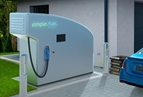 Graphic of the on-site hydrogen generation and dispensing appliance.The SimpleFuel consortium, made up of Ivys Energy Solutions, McPhy Energy North America, and PDC Machines, designed their system to be a safe, small-scale refueling appliance capable of delivering up to 5 kg/day of hydrogen produced via water electrolysis to vehicles at pressures up to 700 bar (10,000 psi).
The SimpleFuel prototype generated and dispensed more than 180 kg of fuel cell-quality hydrogen to power a Hyundai Tucson fuel cell electric vehicle during the three-month test period (enough for more than 10,000 miles of vehicle travel).
The H2 Refuel H-Prize Competition is administered by the Hydrogen Education Foundation and sponsored by the U.S. Department of Energy’s Fuel Cell Technologies Office.

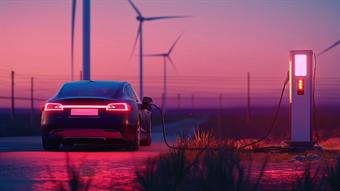

All it needs now is connection to a windmill or solar panel for cheap home produced hydrogen
In reply to #1
What size of solar panel would be required to support a mileage of 100 miles a day, 50 miles?
In reply to #1
See my comment below regarding overall efficiency of this system. You would acquire much more usable energy and transportation utility by storing wind and solar energy in a battery and then using that to power your vehicle.
I've followed thinking on the hydrogen economy for about 30 years. This is a noteworthy development. Imagine a safe home refueling system or one that is used on farms to fuel equipment. Then think of ramping up to industrial scale or displacing petroleum as the energy source at your local fuel station. Coupled with the steep cost decline of solar cells for electricity generation, the technology to store energy cheaply to power equipment 24X7 thanks to Tesla and Panasonic and "water" as the fuel source it turns a lot of things upside down. There are many more opportunities, all of them highly disruptive.
In reply to #2
Yep, the biggest hurdles to using hydrogen was creating it and refueling safely. Hydrogen is hard to distribute using the same manner as gasoline (pipelines, trucks) since it corrodes containment vessels and leaks. We also need a simple refueling method that distracted soccer moms can utilize, instead of high pressure bulky hoses with complicated couplings. If these guys have those problems licked then we're well on our way.
Then again, if accidents in the refueling process happen with distracted soccer moms, this will lead to their reduction, this will in turn leave only concentrating soccer moms in the majority.
Sometimes thinning of the herd is necessary for the long-term survival of the same.
I am ready to purchase one or become a distributor, please send info. to service@imtsi.com
In reply to #6
Obviously, THIS is NOT the place for such an outreach.
How many KWh/Kg of H2 are required?
No mention here of the conversion efficiency of electricity to hydrogen gas. I think when all is taken into account it is around 25% in well designed conversion systems. Photo voltaic cells have a peak efficiency around 20% so if you generated the electricity using PV cells, you will be left with 25% x 20% = 5% of the energy of the sun. Further to this, an internal combustion engine gives around 33% efficiency so in all, around 1.6% of the energy of the sun is eventually delivered to the wheels propelling the vehicle. If your electricity comes from the grid, the coal fired power station runs at an efficiency of around 33% (optimised gas plant ~ 60%). This means that you only extract around 6% from the coal and 12% from the gas burnt to create the electricity. As with PV cells, only about 2% of the energy produced by the coal (or 4% of the gas) which generated the electricity which then generated the hydrogen which then powered the vehicle, is actually delivered to the wheels which propel the vehicle.
I admire the people that built this for their ingenuity but I don't think this is something that, at the moment, will save the environment. I'd like to be proven wrong on this supposition.
With luck, we may see 3D battery technology commercialised in the next 10 years. This technology has an energy density approaching that of liquid fuels. As it is, a Tesla has a 200km comfortably for a 20 minute charge.
In reply to #8
Great message, good numbers and a common and fair point. It gives me a good platform to make a further point. Agreed that those effiencies are about right and that the conversion of sun to car wheels in less than 2%. But when considering fuels dug up from the ground, I don't think the energy in the creation of the coal, oil or gas can be ignored. Using these carbon fuels releases the CO2 that was naturally sequestrated over millions of years (the atmosphere was mostly CO2 in the beginning and theoretically would go back that way if we released all these storages of carbon in the earth).
Looking at the efficiency of creating biofuel from the sun, I think it is less than 0.5% (a simple comparison when considering the creation of coal or oil). In my opinion, this efficiency must be considered in the big picture when including the environmental effect. Then solar to hydrogen wins hands down. Sure, we all can forget the CO2 release, as whether it takes 1 billion, 1 milion, 1000, 100 or 10 years before dangerous levels is up for debate. In our lifetime we might not see much, if any change so sure, some peoole might consider coal or oil as an amazing next to free fuel source. I don't. Solar and solar-to -hydrogen offers a great future and we should leave carbon in the ground. It took billions of years to sequester it; it seems we can release it 1 billion times faster.
In reply to #12
Good points and illuminating. It excites me to think that, we could spend the next 2,000 years correcting the environmental damage humans have done over the last 6,000 years of "civilisation". I recently read an article regarding terra-forming Mars to create a liveable environment. We should look at doing the same thing here on earth as there is much we could do to cultivate plants that would consume carbon-dioxide, increase local rainfall patterns and give habitat to species that are becoming extinct. In the case of Australia, we could even consider creating, or augmenting existing, mountain ranges that would encourage precipitation as well as stabilise weather patterns. As one wild idea, consider what a suburb would look like if it was mandatory to have grass and trees growing on the roofs of every house. There is much that can be done without great expense that not only improves the ecosystem but also adds to the quality of human life at the same time. The two are not mutually exclusive as some think.
Coming back onto subject, whilst hydrogen technology excites me intellectually, at the moment, the most efficient way of capturing solar, wind and other forms of energy are to store it in a battery and then use that battery to drive a motor vehicle. I am therefore, at the moment, keener to look into ways of achieving a cheap, environmentally friendly, high energy-density battery storage system. Meanwhile I watch work in the hydrogen arena with interest.
Using CHP plant efficiency of 98% are possible.
Combining CHP and refrigeration plant efficiency of 140 % is possible. This gives a COP of 1.4.
This compares very favourably with a conventional oil fired system of generating electricity which has an efficiency of 30%
This looks wonderful!! And as 'deeply vested interests' continue to be challenged throughout 2017, certain advanced technologies (way beyond this sort of thing) will begin to come into common view.
While saving the planet is a very worthwhile objective a small plant ticking away in the back yard and providing me with sufficient fuel to get around would be a good start.
I currently spend £5,600 a year on fuel on my own car and could probably add an additional £800 for the wife's. May not take too many years to produce a saving.