
Faster Recharging Batteries Possible After New Insight
Engineering360 News Desk | January 19, 2017Faster recharging lithium batteries could be developed after scientists figured out why adding charged metal atoms to tunnel structures within batteries improves their performance.
Rechargeable lithium batteries have helped power the “portable revolution” in mobile phones, laptops and tablet computers, and new generations of lithium batteries are being developed for electric vehicles and to store energy from wind and solar power.
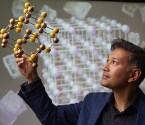 Professor Saiful Islam. Now the research groups of Professor Saiful Islam of the Department of Chemistry at the University of Bath, and Professor Reza Shahbazian-Yassar at the University of Illinois at Chicago, have gained insights to help improve the performance of lithium batteries, published in the journal Nature Communications.
Storing electrical energy more quickly than current electrodes is important for future applications in portable electronics and electric vehicles.
It was recently discovered that large metal ions such as potassium can improve charge storage in batteries, but it wasn’t understood why this was the case.
The research teams used a combination of structural experiments and computer simulations to unravel for the first time why adding charged potassium into tunnel-like structures of low-cost manganese oxide has a strong beneficial effect on the battery performance.
They discovered that adding positively charged ions increased how fast lithium moves within the tunnel structures, which is crucial to improving the charging of batteries.
According to Professor Islam, understanding these processes is important for the future design and development of battery materials, and could lead to faster charging batteries that will benefit consumers and the industry.
According to the research, developing new materials holds the key to lighter, cheaper and safer batteries, including for electric vehicles, which will help cut carbon emissions.
The research is funded by an Engineering and Physical Sciences Research Council (EPSRC) SUPERGEN grant.


Interesting article for two reasons. First, the team of researchers (or at least the ones mentioned) reinforced the shortcomings of the US education system...
Second, the article continues to push the "reduced carbon footprint" myth of using electric vehicles as a majority of the electricity available to recharge them comes from fossil fuels. Unless you are recharging your electric car from solar, wind, geothermal or nuclear power, you are just moving where the carbon is burned...
Given that batteries are chemical reactions, potentially of everything not in the helium column of the periodic table, it would seem reasonable that the optimum battery would consist of some unique 3-D architecture of a yet-to-be discovered coulombic cocktail of elements in electrolyte and electrodes.