Efficiency in lithium recovery from spent batteries
S. Himmelstein | December 12, 2023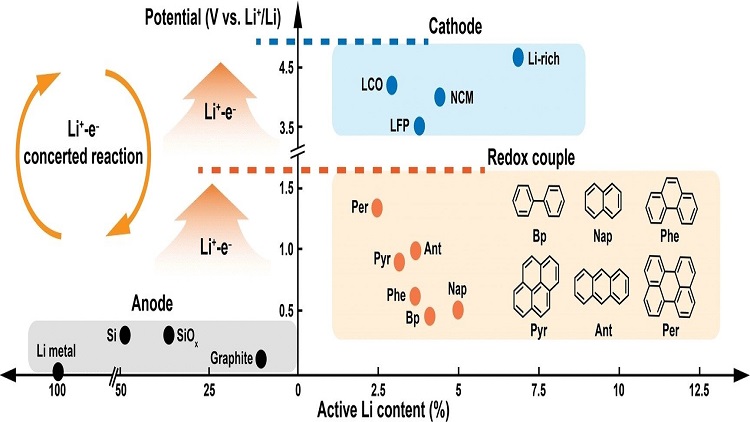 The process was demonstrated to dissolve the active lithium from the anodes almost completely. Source: Angewandte Chemie International Edition (2023). DOI: 10.1002/anie.202310435
The increasing demand for lithium-ion batteries places pressure on dwindling lithium resources, increases the volume of spent batteries and puts a new focus on the benefits of battery recycling for lithium extraction and recovery. The complexities of current lithium recovery routes, such as energy intensity and fire risk, are addressed with a new method devised by researchers from the Chinese Academy of Sciences and the University of Chinese Academy of Sciences.
The approach to a more sustainable means of recycling these batteries, described in the journal Angewandte Chemie International Edition, uses aprotic organic solutions instead of water to recover lithium from anodes. Unlike water, aprotic substances cannot release any hydrogen ions, so no hydrogen gas can form and the risk of fire and explosions is markedly reduced.
These solutions are formulated with a polycyclic aromatic hydrocarbon (PAH) and an ether as the solvent. Certain PAHs can take up a positively charged lithium ion from the graphite anode together with one electron. Under mild conditions, this redox reaction is controlled and very efficient. Use of the PAH pyrene in tetraethylene glycol dimethyl ether was demonstrated to dissolve the active lithium from the anodes almost completely.
The resulting lithium-PAH solutions can be used directly as reagents, for example, in adding lithium to new anodes in preprocessing or in regenerating spent cathodes. The PAH/solvent system can also be varied to optimize its chemistry for the material being treated.