Remote Sensing Spots Infrastructure Cracks After Disasters
John Simpson | November 28, 2016In the wake of natural disasters, the ability to quickly and accurately assess damage to roads, bridges, and other critical infrastructure can save lives.
Researchers led by Chris Lippitt, assistant professor of geography and environmental studies at the University of New Mexico, have developed the capability to map and detect fine-scale changes to such structures.
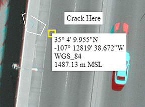 The remote sensing technology can detect changes to infrastructure an inch and a half or larger. Image credit: University of New Mexico“So, rather than ‘is the bridge missing,’ we ask, ‘is there a crack forming in the bridge?’ And, we’re trying to do it in a completely automated way so that we can take the terabytes of data we collect after an event and analyze it automatically,” Lippitt says.
The technology is comprised of two main components: the camera hardware, mounted to a plane or unmanned aerial vehicle, and the software, which analyzes the pictures taken. Prior to a disaster, such as an earthquake or hurricane, emergency management crews take baseline photographs of critical pieces of infrastructure. Then, following a disaster, crews fly over the same areas and take more pictures.
The software then matches the before-and-after images and detects any superficial changes. From there, engineers can determine where the concern lies and pass that information along to emergency crews.
“With the way that we have it currently implemented, we’re detecting any changes an inch and a half or larger,” says Lippitt. “And that’s going to get even better as camera technology continues to improve.”