Sea-Source Heat Pump Warms Buildings
John Simpson | November 11, 2016A multi-purpose facility in the Orkney Islands that has been fitted with a sea-source heat pump is being warmed more cheaply and in a less-polluting manner than if a more conventional source of heat were to be used.
The Warehouse Buildings—Orkney Islands Council’s multi-purpose facility in the town of Stromness—are the first in the archipelago off the northeast coast of Scotland to be fitted with a pump that uses warmth absorbed from a local harbor to supply heat. The sea-source heating system comprises coils of pipes fixed to 12 stainless steel platforms known as "pond mats" that are sunk beneath a nearby pier and draw heat from the surrounding water. The pipes feed this to a ground-source heat pump that elevates the temperature of the water supplied to radiators and an underfloor heating system to 55° Celsius—sufficient to keep the Warehouse Buildings comfortably warm.
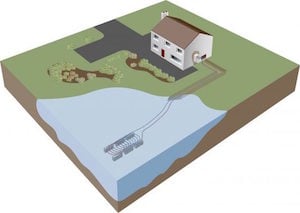 The Warehouse Buildings, in the Orkney Islands, are fitted with a sea-source pump that uses warmth absorbed from a local harbor to supply heat. Image credit: Kensa Heat Pumps. Sea-Source Heat Pump Warms BuildingsAccording to UK-based Kensa Heat Pumps, which installed the system, the cost of the electricity used to run the 40-kilowatt heat pump was £1,550 over a 12-month period, compared to £2,420 for an oil-based system. Greater savings will result if the price of heating oil increases from its current low level, the company notes.
Kensa Heat Pumps says the carbon emissions linked to keeping the Warehouse Buildings warm are calculated to be 6 metric tons of CO2 per year, compared to more than 15 tons if an oil boiler had been fitted. However, the 6-ton figure is based on the UK average for electricity generated for the National Grid. In reality, electricity generated in Orkney results in considerably less carbon emissions: over the course of a year, the islands produce more electricity from renewable sources than is actually used by the local community, with the surplus exported to mainland Scotland.
Heat pumps of the type installed at the buildings can utilize a number of heat sources. In traditional ground-source heating systems, the heat pumps are linked to pipes buried in coils in trenches or in boreholes deep underground.
Water is also a good heat source due to its thermal conductivity and flow, which ensure constant energy replacement. Lakes, streams and rivers can be used as sources of such heat—as well as the sea.