Ceramic-based EV Battery Is Lightweight, Green
John Simpson | October 31, 2016Scientists from London-based start-up UltraCap Ltd. are developing a "green" solid-state battery for electric vehicles that they say will be 40 times lighter than current lithium-ion batteries.
They say the key to the new battery, the UltraCapacitor, is a ceramic-based, high-capacitance capacitator that, unlike current chemical-based solid-state batteries, such as the lithium-ion battery, is eco-friendly.
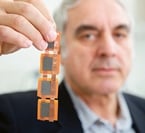 Vladimir Krstic holds the daisy-chained ceramic-based capacitators. Image source: UltraCap Ltd."Right now, electric car batteries are acid-based, toxic, environmentally unfriendly and heavy with a limited life span," says company founder Vladimir Krstic. "Moreover, charging stations remain scarce. Our UltraCapacitor will significantly reduce the long hours currently required to recharge electric cars."
Krstic says that the ceramic battery can contain more electricity in a smaller size than current chemical-based batteries due to a multi-layered capacitator design containing a ceramic di-electric non-conductor. A number of these capacitators are daisy-chained together to form a small, lightweight battery. Using this technology, the release of electricity is not limited by chemical reaction rates. As a result, electric vehicles can recharge in minutes as opposed to hours, according to the company.
UltraCap is currently developing a prototype that it expects will weigh less than 20kg—Tesla's Model S 70kWh battery package weighs approximately 535kg—and deliver five consecutive hours of driving. Once complete, the prototype will be tested in an electric car.