Making Construction Sites Safer with Virtual Reality
John Simpson | October 19, 2016The International Labor Organization, a United Nations agency, has estimated that at least 60,000 fatal workplace accidents occur in the construction industry worldwide each year. Researchers at Ruhr University, in Germany, aim to reduce that number by making construction sites safer with interactive virtual reality (VR) training courses.
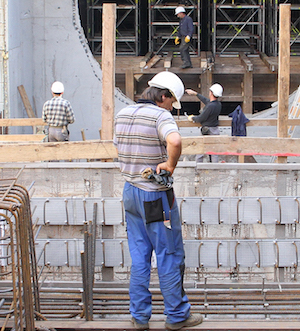 Construction workers could be trained in virtual reality and sensitized to dangers. Image credit: Pixabay.A team led by Professor Markus König, from the university's Institute for Computation in Engineering, is developing the technology to help occupational health and safety experts check critical areas of construction sites in advance and plan suitable safety measures. Construction workers could also be trained in virtual reality and sensitized to dangers, the researchers say. The engineers are making the most of the fact that every large construction site today is first planned virtually before it is actually built. They then employ these three-dimensional models as the basis for a site's representation in virtual reality—enhancing them using much of the same technology found in computer games to ensure that the environment looks as realistic as possible.
With the aid of VR glasses, users can then explore a construction site at which they will later work. They interact with the environment, such as lifting and carrying objects, using hand-held controllers.
PhD student Thomas Hilfert is working on creating the virtual environments and has already completed construction sites with diverse layouts that test subjects can explore in rain, fog or sunshine. Construction machines can be added with suitable sounds to create a virtual building site specific to a particular client.
Together with construction industry safety expert Dr. Jochen Teizer, König and Hilfert plan to enlist research subjects to evaluate their system as a next step. According to the researchers, numerous construction companies from Germany and other countries have already expressed interest in the technology.
“As you have an unlimited number of lives in virtual reality, we can observe precisely how test subjects react before and after fatal accidents and when learning effects come in,” says Hilfert.