Engine Cold Start Redesign Could Cut Emissions
John Simpson | September 02, 2016Automakers aiming to reduce the emissions that their gasoline-powered vehicles generate should focus on design changes targeting pollutants that are emitted immediately after a cold start, new research suggests.
To find out what vehicles on the road are currently emitting, scientists from the University of California, Berkeley; Carnegie Mellon University; the University of California, San Diego; and the Massachusetts Institute of Technology rented 25 gasoline-powered cars, including two hybrids, from residents in the Los Angeles area. The vehicles ranged in age from 2 to 20 years.
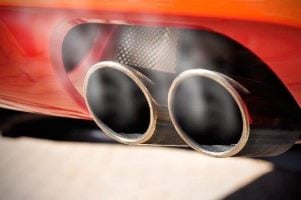 The concentrated release of emissions occurs because the catalytic converter hasn’t had a chance to warm up.The researchers took the cars to the Haagen-Smit Laboratory and drove them on a treadmill. Using a proton-transfer reaction mass spectrometer, the researchers were able to measure a range of compounds coming out of tailpipes—including fuel components such as benzene, toluene and xylenes, as well as incomplete-combustion products such as acetaldehyde, formaldehyde, and acetonitrile.
The researchers found that almost all emissions in properly functioning new vehicles came out immediately after starting the cars when their engines were cold. Once the cars warmed up, they had to be driven 100 to 300 miles to match the levels that came out in the first 30 seconds after the engine was turned on. Even malfunctioning and older cars had to travel 50 to 100 miles to release the same amount of emissions, the researchers found.
This concentrated release occurs because its catalytic converter, which breaks down VOCs, hasn’t had a chance to warm up, says Greg Drozd, postdoctoral research scientist at UC Berkeley. The faster it can heat up, the lower the emissions could be, he says.