Pulsed Electric Fields May Reduce Scars After Burns
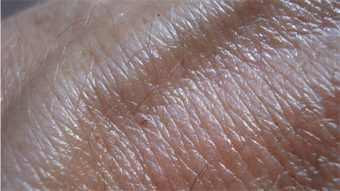
John Simpson | August 29, 2016Treatment of burns with pulsed electric fields (PEF)—a noninvasive procedure that does not generate heat—may help reduce the development of scarring, a Massachusetts General Hospital (MGH) research team has reported. Progress on therapies to treat scars has been very slow, says MGH-CEM Director Martin Yarmush. Image credit: Massachusetts General.
“We showed that killing some, but not all, of the cells in the wound could actually help regenerate skin without scarring,” says research fellow Dr. Alexander Golberg, of the MGH Center for Engineering in Medicine (CEM). “The main difference between this approach and procedures like ultrasound and lasers is that they operate on the whole tissue, while pulsed electric field treatment works on only a cellular level, which we expect will provide more precise treatment results in the future as we are able to target cells specifically.”
Current data suggest that scarring results from alterations in the responses of the many different tissues involved in wound healing. But, despite significant recent progress in understanding the process, the exact molecular mechanisms of scar formation are not fully understood. As a result, the many therapeutic procedures developed to prevent or treat scarring—including surgical removal, steroid injections and laser therapy—have had limited success.
In the new procedure, partial irreversible electroporation induces the formation of tiny pores in cellular membranes—and while the process leads to the death of those cells, there is no damage to the extracellular matrix or to nearby blood vessels or other structures. In fact, PEF-induced cell death causes adjacent cells to proliferate and release factors promoting tissue growth and repair.
In their study, the MGH-CEM team determined the optimal strength, number of pulses and number of treatments required to reduce the formation of scars in rats that had experienced burn injuries under anesthesia. The results showed that five PEF treatment sessions spaced 20 days apart after burn injury reduced the size of scars by almost 58% and improved several properties of the scars, including overall appearance and the structure, density and direction of collagen fibers.
“The progress of therapies to treat scars has been very slow, with very few new technologies in the area, mostly because of the complexity of the problem and the lack of suitable animal models,” says Martin Yarmush, MGH-CEM director. “We now need to investigate whether this new technology and approach will show results in human patients, and we are looking for funding to help us design, build and test a device for clinical application.”