Improved Aerodynamics Helps Volvo Big Rig to 30% Fuel Reduction
John Simpson | June 17, 2016Volvo Trucks’ new concept vehicle uses aerodynamic design and lower curb weight to achieve 30% fuel savings over comparably sized vehicles, the company reports. Testing of the rig, a modified FH 420 model, was carried out on Swedish roads in autumn 2015.
The Volvo Concept Truck—the result of a five-year research project aimed at creating more energy-efficient vehicles—uses a 40% improvement in aerodynamic efficiency to the tractor and trailer to achieve the fuel savings. Volvo says its aim is ultimately to improve the fuel efficiency of long-haul truck transportation by 50%.
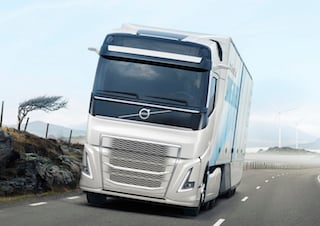 Use of cameras rather than rear-view mirrors helps cuts air resistance. Image credit: Volvo Trucks. "We've modified the entire rig and optimized it for improved aerodynamics as much as possible," says Chief Project Manager Åke Othzen. "For instance, we use cameras instead of rear-view mirrors. This cuts air resistance, so less energy is needed to propel the truck."
Other improvements to the truck's design include optimized chassis side-skirts that cover the rear wheels on the tractor and all trailer wheels; aerodynamic spoilers that extend the trailer and cut air resistance; optimized air flow for the engine's cooling system; and minimized air resistance at the front of the tractor, the wheel housings and entry steps.
Beyond aerodynamics, the truck is fitted with newly developed tires with lower rolling resistance. Additionally, the trailer weighs two metric tons less than a standard trailer, which translates into either lower fuel consumption or a potentially higher payload.
Since the concept vehicle is part of a research project, it will not be available on the market. However, Volvo says that several of its aerodynamic features have already been incorporated into the company's series-produced trucks.