Analog Computer Chip Cuts Power Demand
Engineering360 News Desk | May 04, 2016Georgia Tech engineers have built and demonstrated a configurable analog computer chip that they say uses 1000 times less electrical power than digital computer chips. Moreover, the device can be built 100 times smaller than their digital floating gate counterparts, according to the university’s engineering research team that developed the integrated circuit.
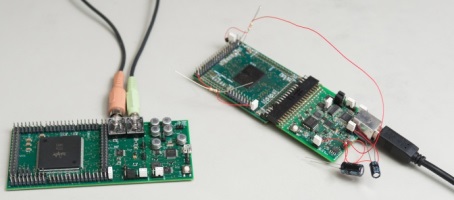 An analog computer chip developed at Georgia Tech University uses a thousand times less power than current digital integrated circuits. The findings could alter the computing and automation landscape, the researchers say, from one where analog chips are used primarily for hard-wired circuits and non-computing tasks, to one where they would replace many of the digital integrated circuits now in service in consumer devices, defense systems and more.
The analog chips are similar to digital field-programmable gate arrays (FPGA), in terms of programming, the researchers say. That’s in addition to being likely to work as well as or better than the digital integrated circuits.
Where the new Field-Programmable Analog Array (FPAA) differs is in their need for power. “You need only milliwatts to run the analog device, while it’s hard to get an FPGA to work on less than a watt,” says Jennifer Hasler, professor of Electrical and Computer Engineering at Georgia Tech and leader of the research team that produced the analog architecture. Hasler says that further design advancements in analog arrays could lower their power needs into the microwatt range.
Hasler’s team developed techniques that perform computations using an analog-style physical architecture. It is based on positioning electrons in the analog device’s connective structure. This approach contrasts conventional FPGAs, which process electrons through floating gates in ways similar to memory chips or central processing units.
One advantage of the analog architecture is that it “lets us do something fairly radical,” Hasler says. “We can compute using the routing fabric of the chip, exploiting areas that are usually considered just dead weight,” Hasler says.
Another advantage of Georgia Tech’s approach is that the analog chips are non-volatile, so they retain data even when power is turned off. This use of non-volatile memory reduces power consumption, compared to higher power needs of the SRAM configurations used in typical FPGAs.