New light-powered filter could keep cleaning air for months
Marie Donlon | October 22, 2026Researchers at Jilin University in China have developed an air filter that uses sunlight and indoor LED lighting to recharge its particle-trapping capabilities.
Offering an alternative to standard filtration systems that protect users from pollutants and airborne diseases, the air filter maintained 99% filtration efficiency after one month of use and 95% after three months of use, the team determined.
“The light-charged system offers a sustainable and customizable approach for particle capture, effectively overcoming the challenges of poor filtration stability and clogging commonly observed in conventional filters,” said author Jihong Yu.
Many commercial air filters use a high-voltage electrical field, known as corona discharge, to electrically charge airborne particles. Once charged, the particles are attracted to oppositely charged or electrically polarized fibers within the filter, causing them to be removed from the airstream. Although effective, these systems require a continuous external power source.
Power-free alternatives, such as triboelectric filters, generate an electrical charge through friction or contact between different materials. This charge creates electrostatic forces that attract and retain fine particles, including dust, pollen and bacteria. However, these filters often depend on synthetic materials, and their electrostatic charge can gradually decline, reducing filtration performance over time.
To address these limitations, the team developed a light-activated filtration system based on a polypropylene membrane. The membrane features a photothermal-ferroelectric coating containing gallium-indium liquid metal particles that absorb light and convert it into heat, allowing the membrane to generate and maintain a surface charge. As air passes through the membrane, the electrically charged surface creates electrostatic attraction with airborne particles, increasing their capture by the filter fibers. Unlike conventional electrostatic filters, the system can regenerate its surface charge through exposure to light rather than relying on a continuous external electrical supply.
The researchers evaluated the filter using sodium chloride and soot particles approximately 0.3 micrometers in diameter under relative humidity levels ranging from 20% to 90%. These tests allowed them to assess how effectively the light-induced surface charge could capture fine particles under different environmental conditions.
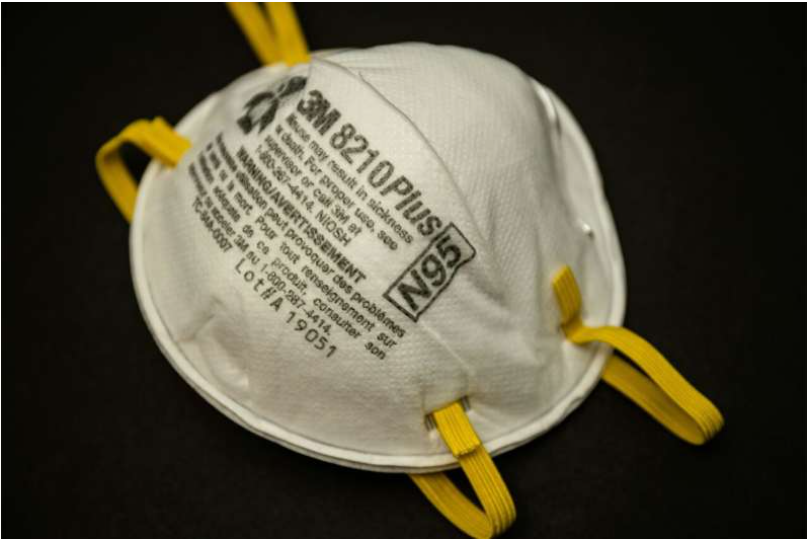
The device can be flushed with water once it becomes saturated with particles captured from the air. Exposure to light restores the membrane’s surface electrostatic charge, allowing the filter to regain its particle-capturing ability. The researchers found that even low-intensity light from indoor LEDs or overcast sunlight could provide sufficient energy to recharge the membrane and achieve filtration performance comparable to N95 and N99 standards.
According to the researchers, the light-recharging process also enables the filter to be reused for hundreds of filtration cycles with little maintenance, save the rinsing step.
The team suggested that the filter might be incorporated into masks, outdoor screens and biological apparatus.
An article detailing the filter, “Sustainable air purification via light-charged filters,” appears in the journal Chem.