Self-healing hydrogel packs powerful adhesion and sensing into one material
Marie Donlon | September 16, 2026A sea cucumber-inspired self-healing ionotronic hydrogel that could one day be used in the making of wearable tactile sensors and more has been created by a team of researchers at the University of Electronic Science and Technology of China (UESTC).
Hydrogels are water-rich, tissue-like materials that can conduct electrical signals while flexing, making them promising for wearable sensors, soft robotics and human-machine interfaces. However, repeated use can incur cracks and punctures, thus reducing their reliability and limiting their wider adoption.
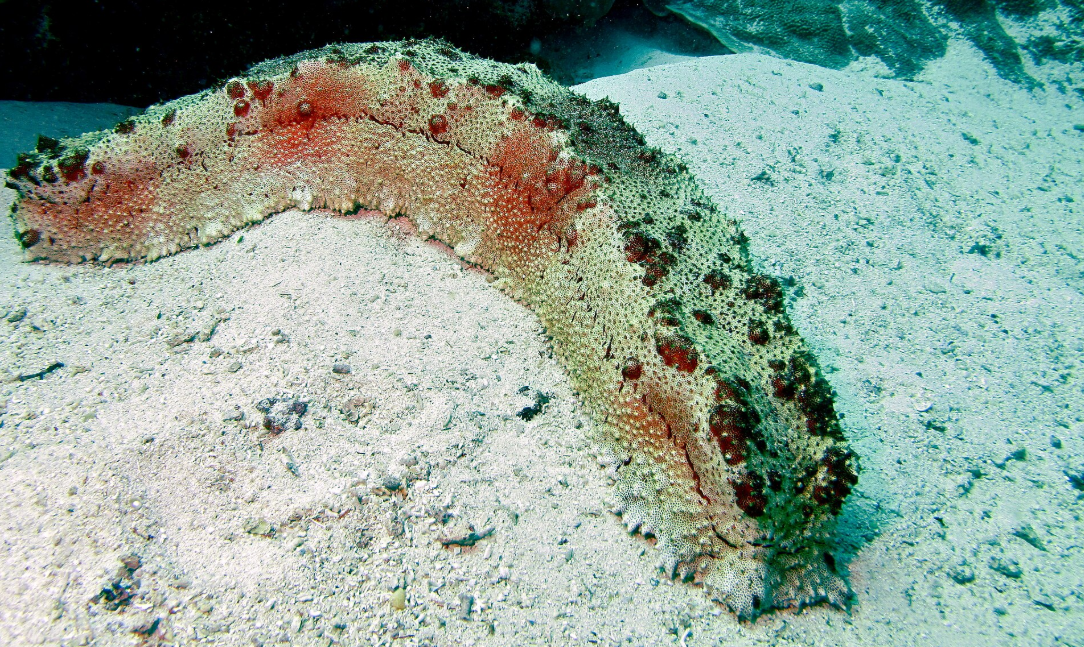 Source: Bernard DUPONT/CC BY-SA 2.0
As such, the UESTC team suggests it has overcome such limitations with a hydrogel (acryloyloxyethyltrimethylammonium chloride, AETC) that combines room-temperature self-healing, strong inherent adhesion and interfacial capacitive sensing within a single material.
Inspired by sea cucumbers’ damage-tolerant tissues, the team developed an ionotronic hydrogel — ion-conducting rather than electron-conducting — that uses reversible ionic interactions and dynamic hydrogen bonds to repair cuts and punctures without external stimuli, recovering nearly all of its electrical conductivity while retaining mechanical strength.
The hydrogel can stretch more than 1,000% and adhere to materials including glass, plastic, metal and silicone. During testing, a hydrogel-based pressure sensor demonstrated high sensitivity, a detection range of up to 1 MPa, rapid response and recovery, and stable operation over 10,000 seconds.
Integrated into a smart tactile glove, the sensors enabled real-time sensing across five fingers, identified five object shapes with 99.3% accuracy and decoded directional commands for an obstacle-avoidance game. The researchers say the technology could support applications in smart prosthetics, soft robotics, health monitoring and human-machine interfaces.
The material is detailed in the article, “Bioinspired adhesive and self-healing ionotronic hydrogel for tactile sensing and human–machine interaction,” which is published in the journal Nano Research.