
The current situation: Electric motor failures
Ryan Clancy | July 20, 2026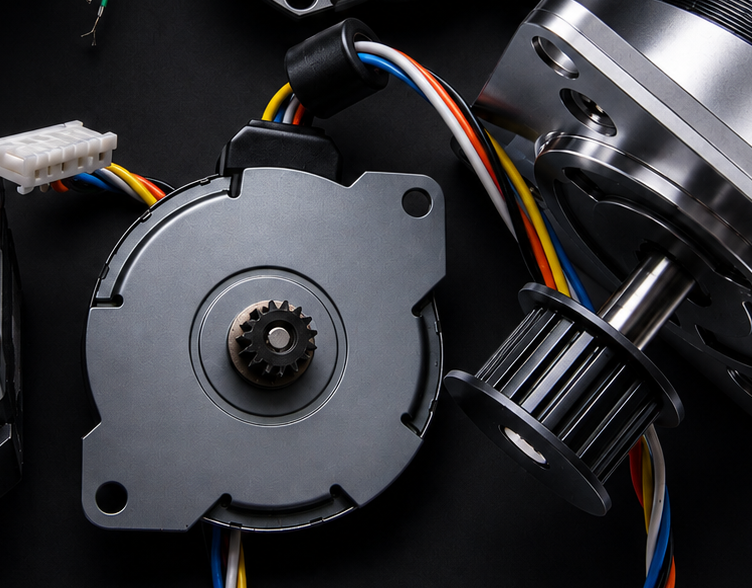
Electric motors are relatively simple machines. For larger equipment, a robust three-phase induction motor runs directly off a star/delta contactor, easing start transients, switching over when a drive coupling reaches full speed. They’re just about the most forgiving machine around, except when the power supply running to their housings goes awry. Loads move predictably when the power supply is smooth, not so predictably when the voltage is distorted.
Bad enough for a basic, last generation electric motor, modern equipment is more complicated. Check out today’s motor circuits for variable frequency drives and electronic soft starters. And that’s just the motor circuitry; local power irregularities complicate matters. Let’s say the gear is in a robotics factory. The power supply comes on, bringing servo drives and controllers online. Dense clusters of switching power inject noise and distortion back into the grid. Motors fail, not immediately, but over time because of power quality shortfalls. Whether it’s because of magnetic fields or inductance currents, the whole setup seems to fight itself.
The hidden power quality crisis killing motors early
A 60Hz power supply is another fundamentally basic beast. There’s a peak voltage and an RMS line running through the curve. A clean, predictable sine wave runs into the equipment, lending rotational torque to a single-phase drive. Alternatively, stepping up the complexity level a touch, three-phase power creates 120° of phase differential. A rotating magnetic field spills out of stator windings as the power comes on, impelling rotor motion. These are the basics of motor technology.
Not so basic or evident, strange power harmonics attenuate power quality. Even DC motors are vulnerable to such electrical power quality irregularities, altering the smooth, ripple-free supply until it’s a fluctuating, noisy mess. Whatever the motor type, the result is much the same. The equipment speeds up or slows down, or it stalls completely. Less noticeable, windings overheat because of eddy currents and hysteresis losses. Bearings suffer from pitting, and precision positioned loads see unforgivable skips and motion swings.
- Reduced efficiency: The motor draws more current for the same output, wasting energy and increasing electricity bills.
- Increased vibration: Mechanical stress from torque ripple imbalance accelerates wear on bearings, couplings and mounts.
- Insulation failure: Heat and voltage spikes degrade winding insulation faster, leading to short circuits or ground faults.
- Speed fluctuations or Instability: Voltage dips and harmonics cause the motor to speed up, slow down or “hunt.”
- Nuisance tripping: Severe power transients make motors stall or trip protective devices unexpectedly.
- Shortened overall lifespan: A motor rated for 20–30 years may fail in just 3–5 years, all because of an electrical supply issue that’s avoidable.
Restoring clean electrical motor power
Here’s an industry statistic that’s pulled up often. Electric motors consume 70% of all electrical power. When that power becomes dirty or unstable, the cost in lost productivity and premature motor failures is enormous. So, what makes electricity dirty? It’s the fact that real-world power grids are rarely perfect. They’re strained by power factor issues, pushed by massive non-linear loads, and just generally impacted by the complexity of modern power transmission.
Entire articles could be compiled on the reasons voltage noise and wave harmonics exist, but that’s not the goal of this post. Power quality is often an uncontrollable outside factor, which leaves engineers racing to come up with solutions. The first of these is filtering. Let’s take up the harmonics thread, as briefly touched upon earlier. The word is out there but not properly defined. Power harmonics occur when old transformers and switching gear distort AC sine waves. Things like power factor correction capacitors and cable inductance further exacerbate the issue. Of course, more aggressive harmonics problems await, kicking in when power passes through electrical systems.
Back with advanced filtering solutions, passive inductors and capacitors create frequency notches, blocking or attenuating unwanted harmonic currents before they can reach electrical motors. These passive filters are reliable and relatively low-cost, making them a popular first step for many facilities. Another passive technology worth recruiting is a SineWave Motor Protection Filter. It’s practically tailor-made for motors, eliminating the common mode noise and differential currents that plague three-phase motors. The end result is a pure sine wave, free of the noise and torque interrupting effects of a dirty power supply.
Summing up the power quality mitigation technologies
With wave conditioning or power filtering in place, electrical motors last. They don’t stall or suffer from unpredictable torque or speed sagging, nor do they overheat or vibrate themselves into junk. The technologies touched upon begin with simple passive filtering, then ramp up to more exotic solutions. Hitachi have their own proprietary active PQactiF modules, built to intelligently balance power factor, remove system harmonics and eliminate multiple forms of power noise.
The result is cleaner power, as demonstrated by the following example. As data center HVAC cooling comes online, electrical motors lined up by the dozen, power management systems compensate for sudden voltage spikes, keeping equipment spinning at full capacity without incurring nasty maintenance bills. The same holds true for massive robotics factories, silicon chip fabrication plants, and any other manufacturing environment where uptime and repeatability are critical.
Solid state electronics may be dead center in the industry spotlight right now, but many of these incredibly dense modular bricks end up as dead ducks without the aid of electrical motors. They cool, transfer loads, position components, pump cooling fluids or air. The fact that they can be affected by poor power quality problems is unacceptable in this day and age. Not a problem, there are numerous passive and active noise correcting technologies on hand to remove distortion and deliver a pristine waveform, protecting system vital motors. From advanced active filtering to PQactiF and beyond, reliable power is easily in reach for all industries.

This reads like an AI - generated arm-waving nonsense!