New non-invasive test could help museums identify fake Van Goghs
Marie Donlon | June 15, 2026A new noninvasive method capable of distinguishing authentic artworks from forgeries, thereby giving museums, collectors and auction houses a potential tool for tackling art fraud, has been developed by a team from the Université Polytechnique Hauts-de-France.
According to its developers, the technique analyzes the microscopic "texture" of a painting by transforming high-resolution images into 3D-like maps. The technique relies on fractal dimensions to analyze surface detail and brushwork patterns, thereby revealing a unique artistic signature.
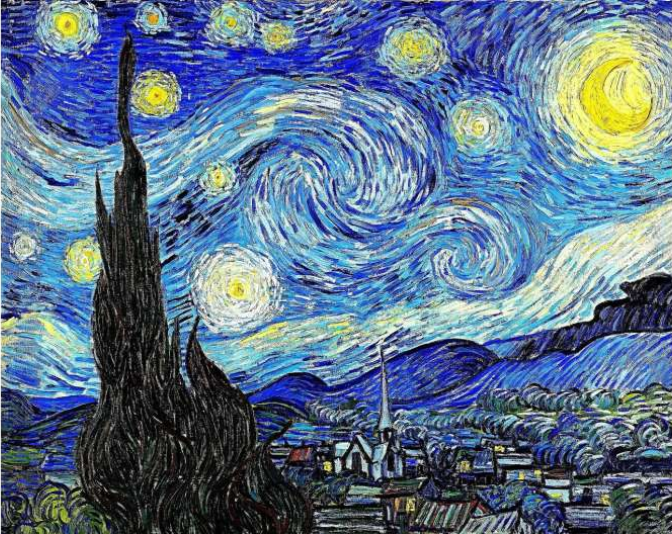
To test their tool, the team used the works of Vincent van Gogh, demonstrating that it can distinguish between authentic paintings and known forgeries.
During trials, the fake The Plowmen was flagged as an outlier, while Sunset at Montmajour closely matched known Van Gogh works.
Likewise, the tool also successfully distinguished the stylistic signatures of Van Gogh from the 17th-century painter David Klöcker Ehrenstrahl.
Although considered powerful, current methods for detecting art forgery — which include a combination of expert opinion, historical research, pigment analysis and digital techniques — tend to be resource-intensive and inconclusive.
However, the team suggests that this new approach could potentially enhance authentication, particularly when combined with the chemical examination of materials, for instance.
"Fractal analysis gives us a measurable fingerprint of an artist's brushwork without needing to sample or disturb the painting. This approach won't replace traditional expertise, but it significantly strengthens it. Our results show that our technique can clearly point out genuine artists and reliably detect known forgeries," the team concluded.
The study, “Preserving Van Gogh's Painterly Heritage: Topographical and Fractal Insights in Authentication,” appears in the journal Surface Topography Metrology and Properties.