Three-layer armor defends vehicles against mines, rockets, drones
Marie Donlon | June 22, 2026An Israel-based armor specialist has developed three new protection technologies designed for countering mine blasts, shaped charge threats and top-down drone strikes against armored vehicles.
The systems from Plasan — dubbed LAPS, ATHENA and TAPS — each concentrates on a specific weakness that traditional armor struggles to address without the addition of extra weight.
 Source: Plasan
The Leg Active Protection System — LAPS — concentrates on reducing lower-limb injuries incurred by underbody explosions inside armored vehicles.
Specifically, when a mine or improvised explosive device is detonated underneath a vehicle, the blast wave will instantly reach the floor, the force of which when transferred upward can severely injure the crew’s legs and feet, even when the hull survives.
While traditional armor typically absorbs and disperses blast energy, LAPS is designed to physically move the occupant from the incoming shockwave.
LAPS is integrated into the vehicle’s energy-attenuating seat structure where sensors detect the blast event within milliseconds and then trigger a quick upward motion that lifts the occupant’s legs before the floor deformation occurs in the cabin. By moving the legs ahead of the impulse's arrival, the system attempts to reduce the potential for fractures, amputations and other severe injuries.
Meanwhile, ATHENA counters shaped charge warheads, which are a significant threat against armored vehicles in the shape of rocket-propelled grenades and anti-tank guided missiles, which uses shaped charges to create high-speed jets of molten metal that penetrate armor via concentrated kinetic energy instead of sheer explosive force.
Oftentimes, that threat is countered using explosive reactive armor, or ERA. These blocks detonate outward when struck, thereby disturbing the incoming penetrator before reaching the main hull. Yet, ERA can cause secondary hazards. Specifically, the outward explosion can injure nearby infantry and damage sensors, optics or external vehicle equipment.
To address this, ATHENA substitutes the explosive reaction with a mechanical one by combining composite armor with an expanding interlayer that quickly changes shape following the impact. This movement disturbs the incoming jet without causing an outward blast.
According to its developers, this armor can counter RPGs, explosively formed penetrators, shaped charge attacks and some kinetic threats while keeping troops operating close to the vehicle safer.
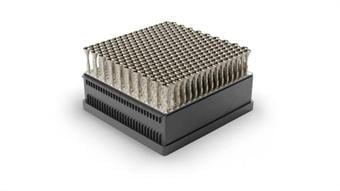
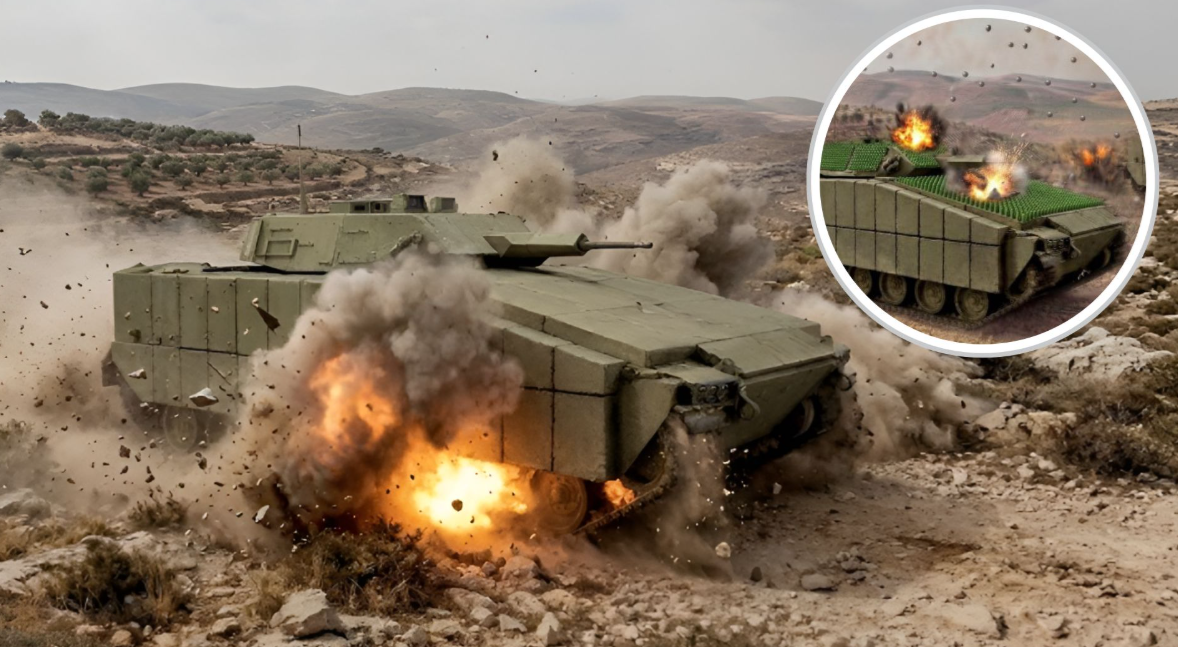
Finally, the Top Attack Protection System, TAPS, concentrates on threats that attack vehicles from above.
As such, TAPS mounts above the vehicle, functioning as an external add-on shield, offering additional protection against fragments, kinetic strikes and downward attacks aimed at weak roof sections.