Overcoming the high-speed semiconductor testing challenge
June 04, 2026As artificial intelligence (AI) becomes increasingly sophisticated, the demand for higher processing power, speed and efficiency in computing has surged. Next-generation technologies, from enterprise data centers (EDCs) and AI PCs to the Internet of Things (IoT) and 6G communications, require unprecedented bandwidth. However, as data rates climb, ensuring signal integrity during semiconductor testing becomes exponentially more difficult. Even slight impedance mismatches or signal degradation can trigger false failures, compromise yields and delay critical product launches.
To address these fundamental industry challenges, Smiths Interconnect, a Molex company, has introduced the DaVinci Gen V. Built upon a patented mechanical foundation, this fifth-generation coaxial test socket provides an out-of-the-box solution engineered to overcome impedance tuning and signal degradation hurdles. The product rigorously tests semiconductor chips during manufacturing to ensure they deliver ultra-reliable, lab-grade accuracy in high-volume production environments.
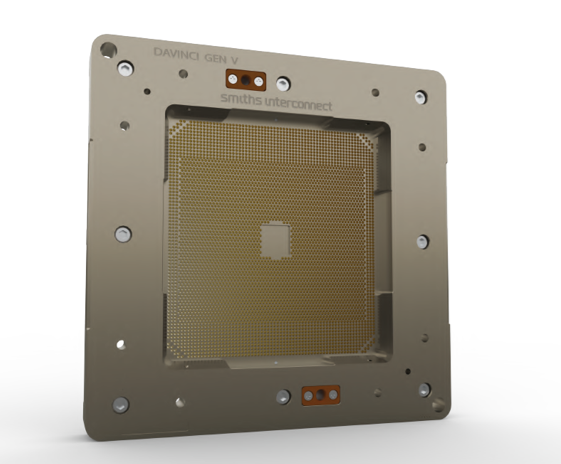 Figure 1. Smiths Interconnect DaVinci Gen V test sockets provide a solution for BGA, LGA and other integrated circuit packaging variants. Source: Smiths Interconnect
Core mechanical innovations
The performance of the DaVinci Gen V is rooted in its core mechanical innovations. A new signal cavity design allows for superior impedance control, establishing a cleaner and more reliable signal path. This is achieved through enhanced conductor-to-ground concentricity, which minimizes signal degradation and surpasses all previous DaVinci series models. The socket utilizes spring probe technology featuring a homogeneous alloy plated with gold to ensure better grounding. These precision probes deliver a consistent, stable contact resistance averaging as low as 33 milliohms and boast a long contact life that has been tested up to 500,000 insertions.
Electrical performance and signal integrity
The electrical performance of the DaVinci Gen V sets a new benchmark for semiconductor validation. Designed to overcome the physical challenge of scaling impedance for next-generation chips, the socket supports staggering digital speeds. It enables unprecedented signaling speeds of up to 224 Gbps PAM-4 for AI accelerators and speeds beyond 100 GHz for future 6G networks.
In terms of RF characteristics, the DaVinci Gen V delivers a bandwidth greater than 84 GHz at a -1 dB insertion loss. The architecture utilizes a short signal path with a 4.90 mm test height and the impedance can be precisely tuned to match the system or be defined as needed.
Operational and manufacturing advantages
Beyond raw speed, the DaVinci Gen V is engineered for streamlined, scalable manufacturing. The socket accommodates high co-planarity and features a tri-temp design capable of operating in extreme environments ranging from -55° C to 150° C. This robust mechanical performance ensures that the exact same socket can be utilized across manual test, bench test and high-volume manufacturing production test stages, guaranteeing consistency.
Recognizing that modern integrated circuits are rapidly growing in complexity and size, the DaVinci Gen V was designed to easily accommodate an increase in next-generation ASIC (application specific integrated circuit) sizes. Despite this scalability, it maintains full compatibility with existing test hardware and PCB socket footprints. This backward compatibility allows manufacturers to transition effortlessly, saving costs, reducing development cycles and significantly accelerating time-to-market. The socket is also highly serviceable in the field, permitting the replacement of a single probe or the full array, and can be cleaned while the system is running using a cleaning surrogate.
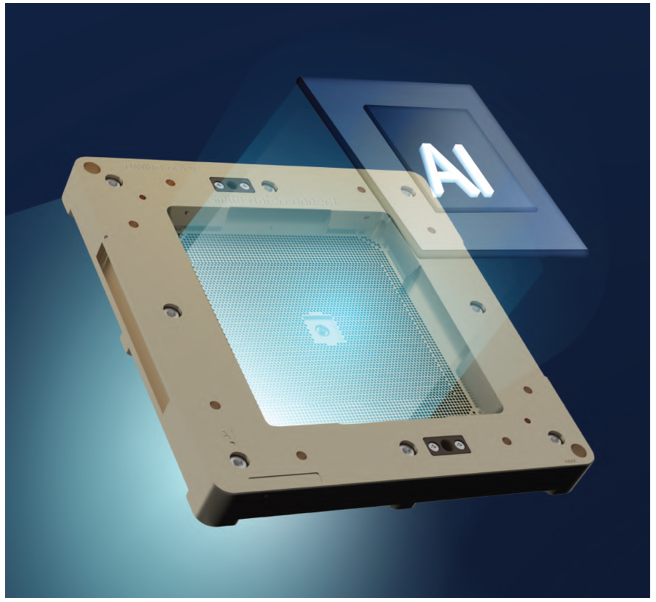 Figure 2. DaVinci Gen V supports the next generation of high-performance semiconductors including advanced consumer SoCs and GPUs, AI accelerators and data center processors. Source: Smiths Interconnect
Target end markets and proven applications
The broad capabilities of the DaVinci Gen V make it ideal for a wide array of demanding end-product markets. Target applications include:
· Data center CPUs and GPUs
· AI accelerators and AI ASICs
· High-performance computing and tensor processors
· Network switches and FPGA SerDes 224
· Autonomous vehicles and ADAS ASICs
Its effectiveness in high-stakes, high-volume environments is already proven. Since the product's launch, Smiths Interconnect has secured a key program with a leading technology company to support their advanced AI GPU accelerator chips.
Building on this initial success, the company was subsequently awarded a next-generation accelerator chip program with the same partner. This continued partnership underscores the superior performance, innovation, and reliability of Smiths Interconnect’s test socket technology.
Conclusion
The DaVinci Gen V test socket redefines high-speed semiconductor testing by combining advanced, patented insulated metal technology with precision impedance tuning. It effectively eliminates measurement errors while guaranteeing lab-grade accuracy and repeatability in robust production settings. By enabling the reliable validation of high-bandwidth devices, the DaVinci Gen V ensures that manufacturers are fully equipped to meet the performance demands and future-readiness requirements of tomorrow's most complex integrated circuits. Contact Smiths Interconnect today to learn more.
About Smiths Interconnect, a Molex company
Smiths Interconnect, a Molex company, is a leading provider of high reliability connectivity products and solutions serving segments of aerospace and defense, medical, semiconductor test and industrial markets. It designs and manufactures technically differentiated electronic components, as well as microwave, optical and radio frequency products and sub-systems that connect, protect and control critical applications.
Smiths Interconnect is part of Molex, which combined, includes over 90 plants across 22 countries with a global headcount to over 55,000 employees.