Buoy beats back algal blooms
S. Himmelstein | July 01, 2026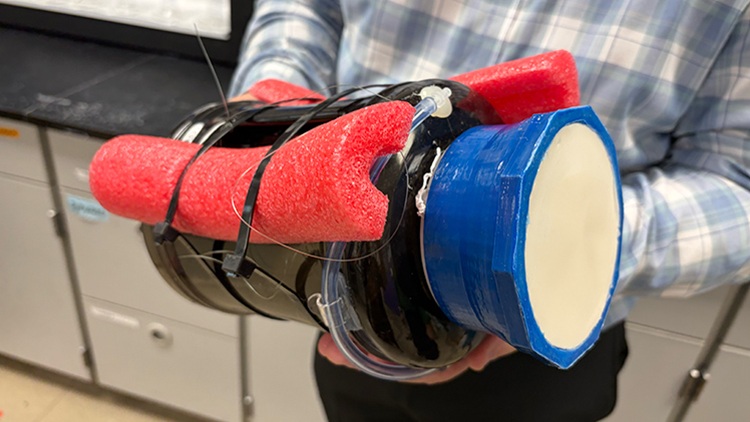 A prototype buoy designed to slowly release algaecide into water over weeks or months and, as part of a larger buoy system, fight back before harmful algae blooms ever fully form. Source: University of Toledo
The occurrence of algal blooms, due to the presence of excessive nutrients in water — likely from fertilizer runoff — causes tiny microorganisms like algae and cyanobacteria to proliferate. The cyanobacteria can release toxins, which are hazardous to humans and wildlife. One such episode in 2014 in Lake Erie rendered drinking water unsafe for hundreds of thousands of residents in Toledo, Ohio. As a substitute for repeated and often ineffective algaecide application following emergence of this problem, a sustained-release device developed at the University of Toledo offers a solution to the prevention of bloom formation in the first place.
Algaecide is slowly released by buoys into water over weeks or months by means of hydrogel disks, which control how a hydrogen peroxide-based algaecide diffuses into surrounding water. An assemblage of these devices can prevent algal blooms for longer time durations relative to conventional means of chemical dosing.
During laboratory tests described in ACS EST Water, algaecide-loaded buoys were placed in a beaker with 1 liter of cyanobacteria-containing water collected from Lake Erie and monitored for two weeks. A small portion of water was replaced daily with new lake water to ensure the buoys were continually exposed to fresh cyanobacteria. The target organisms were almost entirely eliminated within a week, and other microbes remained largely unscathed. The researchers estimate that their buoys could reliably release algaecide for at least four consecutive release cycles, each lasting 35 days.
The researchers suggest that water treatment operators can deploy buoys at the start of the season and let them work continuously throughout problem periods.