
How thermal energy storage is enriched by molten salts
N. Mughees | June 26, 2026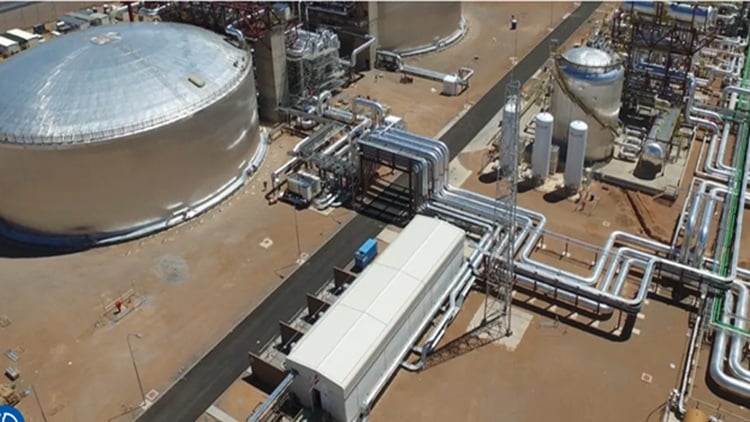 Source: ASC Water & Energy
Thermal energy storage systems are crucial for decarbonizing heating and cooling in industries by capturing surplus renewable energy (wind/solar) to balance supply and demand fluctuations. Fluids in such storage systems provide flexibility and benefits for regulating intermittency in industrial processes. When these materials are in the liquid state, they can act as a heat transfer fluid and a thermal energy storage material at the same time, highlighting their versatility. As a result, the energy system becomes more efficient, which boosts process performance and thermal dependability, decreases operational and investment costs, and reduces carbon dioxide emissions. Although these properties are shared by few materials, molten salt is one that shows great promise. Since it can be heated to a high temperature without changing phases, molten salt is an excellent heat transfer fluid and sensible thermal energy storage material.
What are molten salts?
Molten salts are ionic liquids and represent a substantial category of fluids composed of charged ions. The four most prevalent forms are nitrate, chloride, fluoride and carbonate. These salts are generally combinations of two or more salts formulated to attain favorable thermophysical characteristics for their specific purposes. Consequently, molten salts are frequently utilized in their eutectic formulation. The eutectic point of a salt mixture signifies the temperature at which a solid transitions to a liquid phase, occurring at a unique temperature that is lower than the melting points of any individual components or their combinations. The ability to achieve a wider range of operational temperatures makes molten salts an attractive fluid for storing and transferring high-temperature sensible thermal energy.
Characteristics of molten salts
Generally, molten salts are not regarded as pollutants or combustible when maintained within their thermal and chemical stability thresholds and not combined with other substances. In addition to presenting an expanded operational temperature range, they also confer additional benefits regarding their thermophysical characteristics. Molten salts provide a significant specific heat capacity linked to their elevated density, hence enabling substantial energy storage and transport per unit volume. Furthermore, molten salts are regarded as effective heat transfer fluids owing to their adequately high thermal conductivity. A notable benefit of these salts is their low vapor pressure, enabling operation at elevated temperatures without pressure accumulation, hence providing advantages over thermal oil and steam. This attribute facilitates the implementation of slender walls, diminishes the thermal gradient across the walls, and alleviates temperature-induced mechanical stress.
In addition, the low viscosity values of molten salts help to decrease pressure drops and the power needed to pump them, which in turn lowers the operational cost. Therefore, molten salts can help make systems smaller and less complicated than other available options, with fewer heat exchangers and easier pipe designs needed, which means less equipment expenses overall. Nevertheless, molten salts' high melting temperatures are a major downside since they increase the likelihood of solidification inside pipes. To avoid this solidification, trace heating is a must. Once the salt has melted completely, it will stay at a constant temperature until it reaches its breaking point, which is usually determined by how quickly it decomposes, but can also be affected by the pressure of its vapor at high temperatures. Last but not least, molten salts have limited use due to corrosion in pipes, pumps, valves and containers, which further raises the initial investment. Hence, it is essential to constantly check and regulate the temperature of the molten salt.
Applications
Molten salts do not use chemical batteries (such as lithium-ion) to store energy, but rather large, insulated tanks. The most common way to use it is as follows:
- Heating: Solar mirrors or surplus wind/solar electricity heat the salt from roughly 290° C to 565° C.
- Storage: In a massive "hot tank," the molten salt is forced to boil. Due to its thick nature and great heat capacity, this liquid maintains its heat for long periods of time with little to no loss.
- Powering: The system uses a heat exchanger to transfer the heated salt when the sun goes down or when electricity is needed by the grid. The process boils water into steam at a high enough pressure to spin a conventional turbine, which in turn produces electricity.
- Recycling: A "cold tank" is used to reheat and reuse the cooled salt.
Conclusion
The use of molten salts is an established method of converting solar energy into a continuous power supply. It enables the use of clean, stored heat to power existing steam-turbine technology, which is identical to that for coal and gas plants. A relatively recent development is the storage of surplus power from wind and solar photovoltaics using molten salt. Huge electric heaters resembling a gigantic toaster are used to heat the salt instead of mirrors. By retaining the turbines and substituting molten salt tanks for the coal boiler, it is possible to transform ancient coal-fired power stations into enormous batteries.



Molten salt heat storage is a mature technology, as it is used to recover heat from metal processing, and can find a new application as renewable electricity surpluses become more frequent, as for wind energy in Ireland. I wonder how it compares in cost with "sand batteries". The capacity of either to produce electricity from steam turbines could be the deciding factor in any comparison with batteries and longer duration flow batteries?