Light-responsive hydrogel films rapidly reshape surfaces
Marie Donlon | May 10, 2026Light-responsive hydrogel films capable of reshaping soft surfaces without physical contact have been developed by a team of researchers at Tampere University, Finland.
With the potential for applications in sensing, photonics and biomedical devices, the films combine high sensitivity, fast actuation, precise spatial control and reversibility, thus enabling surfaces to be repeatedly reconfigured via remote optical stimulation.
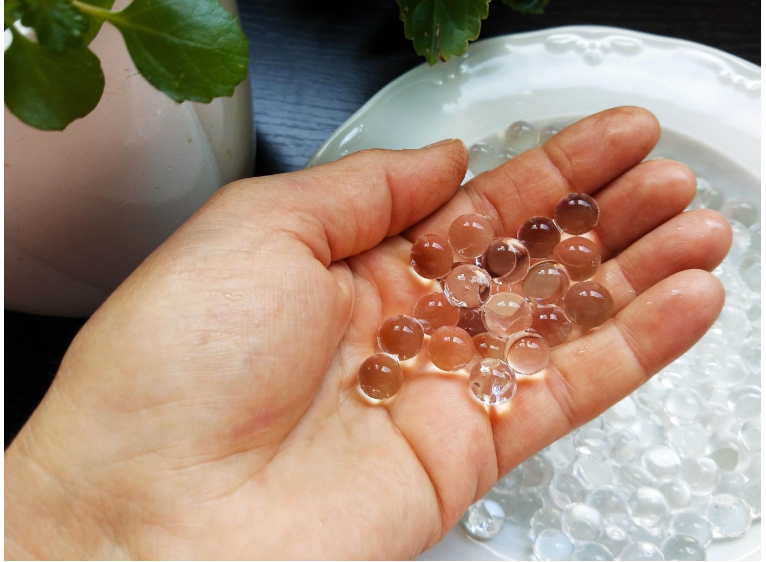
The team explained that these hydrogel films absorb and release water when illuminated, which then causes controlled shape changes. Because of this, the hydrogel films might be appropriate for lightweight systems where mechanical contact is impractical or undesirable.
While previous hydrogel films have typically operated on timescales of tens of seconds and with spatial resolutions in the tens of micrometers, their use in applications requiring speed or fine control is likely limited. However, the Tampere team reportedly achieved faster response times — operating in under one second — while also reaching sub-micron precision, thus marking a significant increase in both speed and accuracy.
The team added that the platform could eventually support dynamic surfaces for optical components, sensing systems and biomedical tools.
“The fast response additionally allows creation of ‘living surfaces’, where protrusions are constantly moving and capable of transporting objects on the surface,” the team explained.
Further, the moving surfaces could be used to possibly transport tiny particles or liquids as well as enable more flexible microscale devices. In the long term, the technology could eventually support soft microrobots, targeted drug delivery and advanced cell culture systems that better imitate biological environments. The team also added that such materials could offer dynamic, heartbeat-like stimulation to cells, with potential for light-controlled, adaptable platforms in microfluidics.
An article detailing the work, “Live-shaping of hydrogel thin films with light,” appears in the journal Nature Communications.