It takes an ecosystem
April 01, 2026For more than half a century, McElroy has led the world in thermoplastic pipe fusion technology, designing the rugged machines at the heart of critical water, energy and mining infrastructure.
Today, that leadership extends beyond mechanical innovation and into an advanced digital ecosystem that connects equipment, operators and data into a single workflow. This system transforms how fusion work is performed, documented, monitored and improved, setting new standards for accuracy, accountability and operational efficiency.
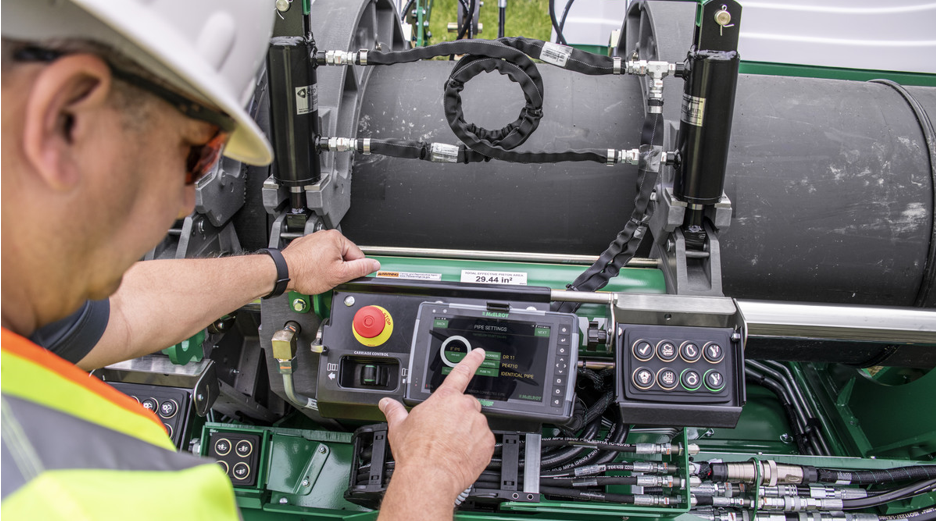 Figure 1: At the center of McElroy’s digital ecosystem is the DataLogger 7, a powerful and ruggedized tablet designed to meet the unique needs of each fusion job. Source: McElroy Manufacturing
At its roots
Any ecosystem is only as strong as the roots that sustain it. And in McElroy’s case, the cornerstone of the plastic pipe industry is the confidence that a fused high-density polyethylene (HDPE) pipeline, when installed correctly, provides a leak-free piping solution that can last up to a century.
What makes a quality installation? At McElroy, those considerations include:
· A qualified operator — Qualified operators undergo classes to ensure they are well-versed in the pipe fusion process. McElroy University offers several qualification classes that cover a wide range of fusion processes, from small-diameter and manual fusion to large-scale operations. These classes are available worldwide and are taught by McElroy certified instructors, ensuring that students are ready for the job ahead.
· A qualified procedure — To ensure consistency and quality of each joint, an accepted standard should be used when fusing HDPE or other plastic pipe. These guidelines establish things like the pressure needed for the size and type of pipe being joined, heat and cool times, and more.
· Qualified equipment — A high-quality fusion machine is one of the most important tools on any fusion jobsite. A quality machine will be ready for the job ahead and, in many cases, may reduce the need for extra heavy machinery or manpower. Many McElroy machines are designed around a single operator, allowing one person to control the fusion from start to finish.
· Quality control — During and after the pipe fusion process, data-logging tools can record and store the fusion parameters. Data-logging devices provide tools to improve decision-making and overall jobsite performance in the field.
· Qualified material — High-quality pipe is critical to the overall fusion process. During pipe fusion, a strong, homogenous bond is formed between two pipe ends, resulting in a leak-proof joint that matches the strength of the pipe itself. Using high-quality pipe ensures consistent melting and flow, along with structural integrity to prevent weak points.
Tools of the trade
At the center of McElroy’s digital ecosystem is the DataLogger 7, a powerful and ruggedized tablet designed to meet the unique needs of each fusion job. From its first iteration in 1996, the DataLogger has evolved into one of the most valuable tools on any fusion jobsite.
The DataLogger gives operators the tools they need to perform, document, record and review each joint as it’s fused, tracking heat soak times, pressures, fusion durations and more. An additional suite of quality assurance innovations include GPS information for each individual joint, the operator who performed the fusion, and exception reporting that lets inspectors, contractors and engineers find potential issues in the joint before it goes into service.
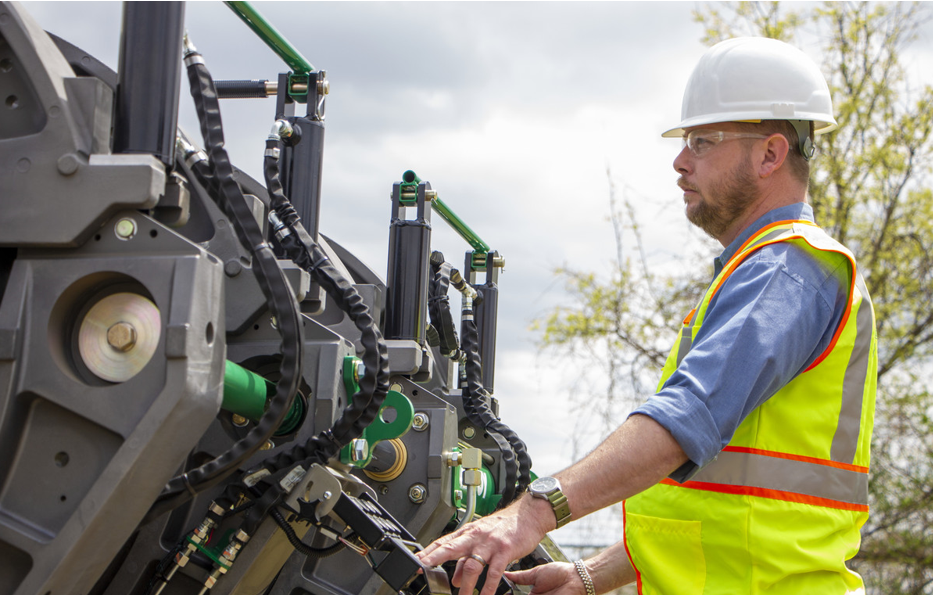 Figure 2: The Vault serves as a bridge between the jobsite and everyone who depends on that joint performing the way it should, from engineers and inspectors to municipalities and utility owners. Source: McElroy Manufacturing
Once a fusion is made and recorded, it can be stored in the McElroy Vault, a cloud-based library built for the industry’s need for accuracy and traceability. Introduced in 2013, the Vault creates a permanent home for fusion records — storing joint reports, operator logs, GPS stamps, machine data and everything inspectors and owners need to stand behind the integrity of their systems.
The Vault serves as a bridge between the jobsite and everyone who depends on that joint performing the way it should, from engineers and inspectors to municipalities and utility owners.
“Our charter is to support the integration of technology into our equipment, including how we support it in the field, and to increase the value of jobsite data captured through the DataLogger and managed within the Vault,” said Chris Zenthoefer, McElroy’s vice president of product strategy.
In an industry where compliance matters and documentation can make or break a project McElroy’s digital toolset offers the highest level of accountability from start to finish.
Smarter machines
Rugged and innovative machines are the core of McElroy’s innovation, and the transition into an expanded, technologically integrated lineup has been a careful and curated one.
Since the DataLogger 6 was first introduced in 2017, McElroy has released several new functions, such as an interface offering a guided workflow to help operators through the fusion process and pressure graph visualizations.
In 2020, McElroy took the next step toward data integration with the TracStar iSeries. This line of machines is fully integrated with the DataLogger 7, and it serves a dual purpose. Not only does it provide valuable fusion data, it also gives McElroy’s product teams the opportunity to improve its features based on user feedback.
The TracStar iSeries has become McElroy’s most successful equipment line, and with it, numerous digital advancements have been made. That includes innovations like FusionGuide Technology, which allows users to choose the level of machine automation during the fusion process. As of 2026, about 60% of the fusions logged in the Vault have been performed in “Level 3,” or fully automatic fusion.
These machines represent a new era of fusion equipment: emission‑compliant engines, refined hydraulics, advanced electrical systems, CAN bus diagnostics, collision avoidance sensors and integrated DataLogger tablets that act as both command centers and recordkeepers. For some machines, like the Tritan 560, the DataLogger interface is used for all machine functions, with a user interface intentionally designed to feel intuitive for new and experienced operators alike.
It’s a matter of efficiency as well. Automation eliminates common errors and reduces variability, but it also means a single operator can manage multiple machines at once.
“That’s workforce multiplication,” Zenthoefer said.
A guiding process
To take digital integration a step further, the DataLogger works in tandem with McElroy’s FusionGuide Control System, available on McElroy’s industry-leading TracStar iSeries, the Tritan 560 and the company’s newest addition: the Acrobat iSeries.
The FusionGuide Control System offers guided workflows designed to keep operators on track through every stage of fusion. With three levels of control that vary from manual fusion to a fully automated fusion process, FusionGuide adapts to the operator’s experience level, which not only allows for a more efficient jobsite but also allows newer operators to quickly become comfortable with the machine and its process.
Another recent addition to McElroy’s quality assurance lineup is the McElroy Equipment Inspection App, which is now available online for Android and iOS devices. The app allows machine owners to manage and maintain their fleets, ensuring each piece of equipment is ready to perform. The inspection app can be used with rental equipment as well as inspections required by companies and governmental agencies alike. The app is best viewed using McElroy’s DataLogger 7, but it can be used on any device.
The app seamlessly guides users through the inspection with pre-populated checklists for machines and components. The built-in DataLogger camera can be used to snap pictures of machines, allowing for easy identification. To streamline operations, the Inspection app allows users to create customized inspection surveys for any piece of equipment they own — not just McElroy fusion machines. An additional feature for McElroy products is that the app provides access to OEM replacement part numbers, allowing owners and distributors to easily create a list of replacement parts if repairs need to be made.
“Our systems are meant to help companies meet the moment, helping operators be more productive and more quickly bringing new operators to high productivity,” Zenthoefer added.
Training meets tech
McElroy’s commitment to the plastic pipe fusion industry doesn’t end with machines and data. It loops back into McElroy University, where operators build the skills that feed directly into their digital identities. When someone completes a course, online or in person, that credential becomes part of their operator profile.
Announced at INFUSION24, operator profiles tie a person’s training, experience and fusion history into one portable digital identity.
Operators receive a card with a near field communication (NFC) chip. When they tap it against a DataLogger — much like tapping a phone to pay — they’re instantly logged in. Their training from McElroy University, their joint history stored in the Vault, their machine experience and more become part of a living resume they carry with them.
And the benefits don’t stop there. Tap the card against a smartphone, and supervisors can view the operator’s summary stats, including machines used, pipe sizes fused and educational courses completed.
In an industry struggling with skilled‑labor shortages, this platform provides a system that recognizes and preserves an operator’s expertise.
But McElroy’s training offerings don’t end with McElroy University. In situations where a newer operator wants or needs to practice the fusion process without a physical machine, operators can simulate the fusion process via trainer mode on the DataLogger 7 tablet.
This allows new or inexperienced operators to familiarize themselves with both the fusion process and the DataLogger itself, without the need for a physical machine.
Trainer mode also includes an option to streamline the training process by shortening the amount of time needed for simulated heat soak and fuse/cool times. Simulated fusions for training purposes are available for multiple McElroy machines, including the TracStar 1200i, TracStar 412i and Tritan 560.
Telling a story
At the end of the day, Zenthoefer says, the data collected, the training completed, and the many other facets of McElroy’s digital ecosystem come down to one mission: telling a story.
“That’s always been the focus of the DataLogger and Vault,” he said.
And while no single part of an ecosystem is its own standalone tool or software, he added, it’s a collection that interacts within itself to contribute to the overall improvement of the environment — or, in this case, the plastic pipe fusion industry.
Today, the pipe fusion industry is faced with unprecedented growth, largely driven by large-scale and time-sensitive projects like data centers. At the same time, that expansion is accelerating contractor exposure, expediting the interest in fusible plastic pipe into other sectors like municipal water.
It’s a compounding growth, and when coupled with a projected shortage of roughly 50,000 skilled workers annually in the U.S. construction industry, the result is a critical demand for both experienced operators and quality assurance.
Zenthoefer sees it as an opportunity.
“McElroy’s ecosystem offers not only increased efficiency, but also documented quality and lower risk,” he said.