9 essential tips to keep lab measurements accurate, compliant and efficient
Parul Chhaparia | March 09, 2026In today’s fast-evolving laboratory environment, achieving accurate and reliable measurements is more critical than ever. Whether you’re working in pharmaceuticals, environmental monitoring, food production or chemical manufacturing, maintaining precise pH, conductivity, ion concentration, redox and dissolved oxygen (DO) measurements is vital to ensure product quality and meet regulatory compliance.
But how can labs keep up with these demands while optimizing efficiency? Here are nine practical tips to help you enhance your measurement processes and maintain high standards consistently.
1. Simplify operations
The main challenge in measurement processes lies in balancing accuracy with efficiency and compliance. Simplifying operations can significantly reduce errors and improve workflow. For example, using meters with intuitive interfaces allows users to perform measurements quickly and consistently, while standard operating procedure (SOP)-based methods guide each step — from sample preparation to calibration — minimizing mistakes. Modern sensors that automatically identify themselves and provide real-time data further ease the process.
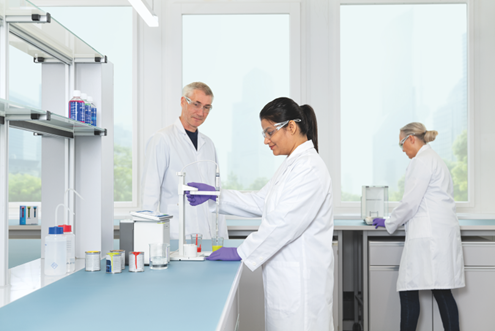 Bench safety organization improves safety, reduces cross-contamination and streamlines daily workflows. Source: Mettler Toledo
2. Calibrate accurately
Accurate calibration remains a cornerstone of reliable measurements. Using uncontaminated calibration buffers — ideally fresh sachets designed for single use — helps maintain accuracy and reduce contamination risk.
3. Place sensors precisely
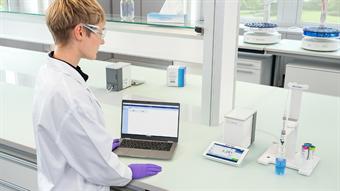
Sensor placement may seem like a small step, but it also plays a crucial role in measurement precision. While handheld sensors can work, using electrode arms allows for stable and precise positioning, minimizing spillage and improving repeatability. These arms often accommodate multiple sensors, supporting efficient switching between measurements.
4. Troubleshoot efficiently
Troubleshooting becomes much easier with sensors equipped with diagnostic features. Such sensors can provide step-by-step guidance to identify issues quickly, reducing downtime and avoiding workflow interruptions. Continuous monitoring of sensor condition helps with preventive maintenance, extending sensor life and ensuring measurement consistency.
5. Plan ahead with modular systems
The lab requirements are changing constantly. When planning to invest in lab instruments, looking forward, investing in modular measurement systems provides flexibility and scalability. With modular pH meters additional parameters can be added as your lab’s needs grow, offering a cost-effective and adaptable solution. Smart sensors with detachable signal bridges and cable also simplify replacement and promote sustainability.
 InLab DES digital sensors feature smart diagnostics for sensors health, step-by-step troubleshooting, preventative maintenance and extended sensor life. Source: Mettler Toledo
6. Maximize bench space
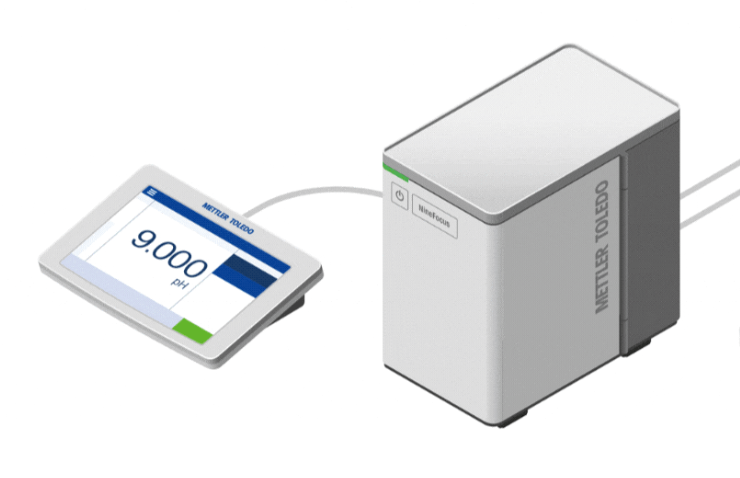
Optimizing your workspace is important. Meters with detachable terminals offer flexible placement options that help keep your bench organized and clutter-free. This organization improves safety, reduces cross-contamination and streamlines daily workflows.
The NineFocus meter offers much-needed bench space flexibility. Its terminal can be positioned wherever it is most convenient and comfortable — in front of the meter, on top of it, freely on the bench, or mounted on the EasyPlace electrode arm. With various cable lengths, the system can be operated safely even under a fume hood.
7. Automate processes
Automation is another key to enhancing productivity. Autosamplers can handle large sample volumes efficiently, providing consistent results while reducing manual labor and errors. Features like automatic sensor cleaning and temperature-controlled water baths ensure optimal sample conditions and reduce maintenance needs.
8. Ensure data integrity
Safeguarding data integrity and compliance is non-negotiable. Protecting measurement settings through user access controls and implementing role-based permissions help prevent unauthorized changes.
9. Stay compliant
Automated metadata recording and comprehensive audit trails are vital to meeting regulatory requirements such as 21 CFR Part 11 and EU Annex 11. Advanced data management software supports electronic signatures and traceable reviews, simplifying audits and ensuring adherence to validated methods.
Simple yet valuable, embracing these strategies in the lab workflows can help laboratories confidently meet today’s stringent demands for precise, compliant, and efficient measurement processes, driving quality and productivity forward.
To further support your lab’s journey toward reliable and effortless measurements, consider exploring advanced pH meter solutions designed to simplify workflows and deliver consistent accuracy.
For more information, contact: pHmatters@mt.com