Understanding pH measurements: Common questions answered
Parul Chhaparia, courtesy of Mettler Toledo | April 30, 2025From your food, water to medicine and to even your wall paint, you name it — you will find pH as a key element in all of it that significantly impacts their characteristics and quality. This pH measurement is often a common practice in labs across industries.
What is pH?
Simply explained, pH is a measure of how acidic or basic a solution is. The parameter is represented on a scale from 0 to 14, where 7 is neutral, meaning the solution is neither acidic nor basic. Values below 7 indicate acidity, with lower numbers representing stronger acids (like lemon juice or vinegar), while values above 7 indicate alkalinity, with higher numbers representing stronger bases (like baking soda or soapy water).
 The pH scale. Source: Mettler Toledo
pH measurements are crucial in a variety of fields, from agriculture to pharmaceuticals. Whether you're a student, a researcher or just someone curious about the science behind pH, it's essential to understand the common questions that arise in this area.
This article answers some of the most frequently asked questions about pH measurements to enhance your understanding and application of this vital concept.
1. How do I measure pH?
In laboratories, pH is commonly measured using a pH meter. A pH measurement system consists of a pH meter and a sensor that is inserted into the solution, providing a digital reading of the pH level. Besides, you will also need at least two pH buffers, and other accessories including storage solution, beakers, sensor placeholder and cleaning solutions.
2. Do I need a portable meter or a bench meter?
The choice between a portable and a bench pH meter depends on your specific application. If you need flexibility and the ability to measure pH in various locations, a portable meter will be what you would require. For example, for pH measurement in a water body, agricultural soil, or in aquaculture, it is better to have a meter that is versatile, lightweight and battery-operated.
For in-lab measurement, a bench-top meter is always preferred for better signal stability and accuracy of data.
3. Which factors affect pH measurements?
Factors like temperature, the presence of ionic substances and the calibration of the pH meter can significantly affect pH measurement accuracy. Temperature can influence the dissociation of acids and bases, while impurities or different ions in the solution can affect the accuracy of the pH reading. Regular calibration of the meter with standard solutions is essential for reliable results.
4. What is the difference between automatic temperature compensation and manual temperature compensation?
Automatic Temperature Compensation (ATC) and Manual Temperature Compensation (MTC) are two methods used in pH measurement to address the effects of temperature on pH readings. ATC automatically adjusts the pH value based on the sample's temperature using an integrated sensor, ensuring accurate results without user intervention. MTC requires the user to manually input the temperature, which can lead to potential errors if not done accurately. While ATC offers greater precision and ease of use, making it ideal for laboratory and critical applications, MTC may suffice for simpler tasks or educational purposes.
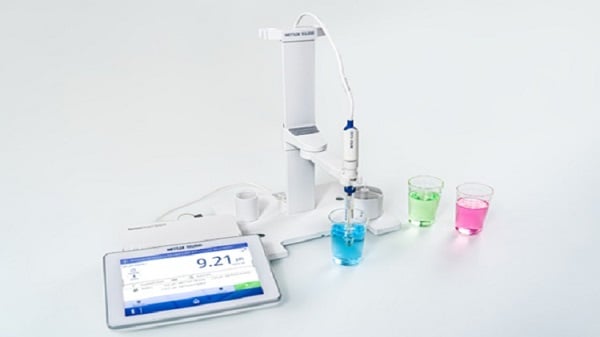 Calibration: It is recommended to calibrate a pH sensor before each use, or at least once daily if used frequently. Source: Mettler Toledo
5. How often should I calibrate my pH sensor?
Calibration frequency depends on different factors. It is recommended to calibrate your pH sensor before each use, or at least once daily if used frequently. Calibration is crucial to ensure accuracy, especially if you are measuring solutions with significantly different pH levels. Using at least two standard buffers — typically pH 4 and pH 7 — can help ensure precise calibration.
6. What is a pH buffer, and why is it important in pH measurements?
A pH buffer is a reference solution of known pH value that is used for sensor calibration. pH buffers are key to ensuring accurate pH readings. In other words, a pH buffer is a solution that helps maintain a relatively constant pH level when small amounts of acids or bases are added. It typically consists of a weak acid and its conjugate base or a weak base and its conjugate acid. Buffers are crucial in pH measurements because they provide a stable environment for accurate readings by preventing significant fluctuations in pH that could occur due to the introduction of other substances. When calibrating pH meters, standard buffer solutions with known pH values are used to ensure precise and reliable measurements of unknown samples, making buffers essential for various scientific and industrial applications where pH control is vital.
Download our pH Essential Guide. This comprehensive resource is packed with valuable insights, practical tips and expert advice to help you optimize your pH measurement results.
To contact the author of this article, email pHmatters@mt.com