Tiny patch shows potential for healing damaged heart muscle post-heart attack
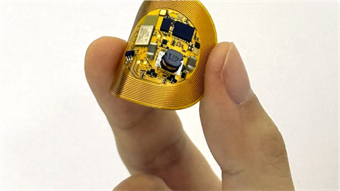
Marie Donlon | December 08, 2025Researchers from Texas A&M have created a new microneedle patch for treating damaged heart muscle following a heart attack.
According to its developers, the patch painlessly delivers a targeted dose of interleukin-4 (IL-4), directly into injured tissue, potentially repairing the heart itself while simultaneously avoiding the side effects of earlier drug delivery methods.
With each microneedle carrying microscopic particles infused with IL-4, the biodegradable patch dissolves after reaching the surface of the heart.
“This patch acts like a bridge,” the researchers noted. “The microneedles penetrate the outer layer of the heart and allow the drug to reach the damaged muscle underneath, which is normally very hard to access.”
Because heart attacks starve muscle cells of oxygen and nutrients, the body responds by forming scar tissue that stabilizes the organ but that cannot contract. As such, healthy muscle is forced to compensate, thus increasing the risk of long-term failure.
Wanting to interrupt that decline, the team shifted how immune cells behave in the damaged region. The team explained that macrophages are key to this strategy because these cells can inflame tissue or help it heal. However, IL-4 transforms them into helpers.
In early experiments, use of the patch resulted in fewer inflammatory signals in the surrounding tissue and a reduction in scarring. Additionally, muscle cells were more responsive to cues from other nearby cells, particularly endothelial cells that line blood vessels, thus suggesting that recovery was being encouraged.
Further, the researchers saw stronger activity in the NPR1 pathway, which supports blood vessel health and reduces harmful inflammation.
The patch is detailed in the article, “Immunomodulatory microneedle patch for cardiac repair in rodent and porcine models of myocardial infarction,” which appears in the journal Cell Biomaterials.