
MAQ20 Data Acquisition System — Precision. Performance. Proven reliability.
November 03, 2025The evolution of data acquisition
Since their earliest forms, data acquisition (DAQ) systems have advanced remarkably. Initial electromechanical recorders — limited to a few channels and paper chart outputs — have given way to fully electronic platforms capable of monitoring thousands of variables at extraordinary speeds.
For over 40 years, Dataforth Corporation has been a leader in signal conditioning and DAQ innovation, developing flexible, reliable and cost-effective systems for industrial and scientific applications. Its flagship solution, the MAQ20 Data Acquisition and Control System, is trusted worldwide in many sectors such as, but not limited to, process automation, test and measurement, aerospace, defense, energy, power generation, and oil and gas.
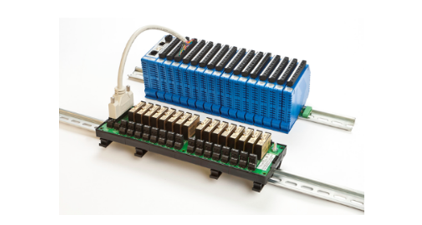 Figure 1: The MAQ20 Data Acquisition System. Source: Dataforth Corporation
Built for accuracy and durability, the MAQ20 delivers high-performance data acquisition in the most challenging environments — scalable from compact installations to large distributed systems.
The MAQ20 family: Modular power and scalability
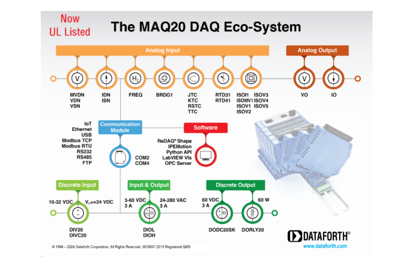 Figure 2: The MAQ20 DAQ ecosystem. Source: Dataforth Corporation
The MAQ20 family is a modular ecosystem designed for maximum flexibility and performance. With 28 different I/O modules available, users can build systems tailored to specific application and research requirements.
Analog input modules
- Support of process voltage, process current, thermocouples (J, K, T, R, S), three- or four-wire RTDs, potentiometers and strain gages
- Each channel is individually configurable
Analog output modules
- Isolated, eight-channel current and voltage units
- Per-channel configuration for precise control
Discrete I/O modules
- Six isolated input/output channels
- Standard digital operations plus seven advanced functions:
- Frequency counter/debounce
- Waveform measurement
- Time-between-events
- Frequency generator
- PWM
- One-shot pulse generator
Communication modules
- Interfaces: Ethernet, USB, RS-232/RS-485
- Protocols: Modbus TCP/RTU, FTP transfer and IIoT remote access
Each MAQ20 system supports up to 384 analog or 480 digital channels, mounts easily on standard DIN rails and operates from -40° C to 85° C. Configured systems can operate standalone as data loggers or PID controllers.
Applications: Proven performance in the field
Remote monitoring and control
The MAQ20’s adaptability and reliability make it ideal for remote installations:
- Offshore wind turbines: Real-time temperature, pressure and current monitoring transmitted to mainland facilities.
- Fluid management: Integrated IIoT-based DAQ system linking remote tanks and processing stations to centralized control.
- Municipal water systems: Continuous water level monitoring for resource management and leak detection.
Harsh and demanding environments
Engineered for industrial ruggedness, the MAQ20 thrives where others fail:
- Structural monitoring: Low-cost, low-sample-rate in-situ monitoring during foundation underpinning.
- Vehicle testing: Compact, low-power data acquisition across extreme thermal and vibration conditions.
- Emissions measurement: Ethernet-based data collection in hazardous locations with wide temperature tolerance.
Certifications:
· UL/CUL (Class I, Div. 2, Groups A, B, C, and D)
· CE Heavy Industrial, and RoHS (EU 2015/863)
Software integration and tools
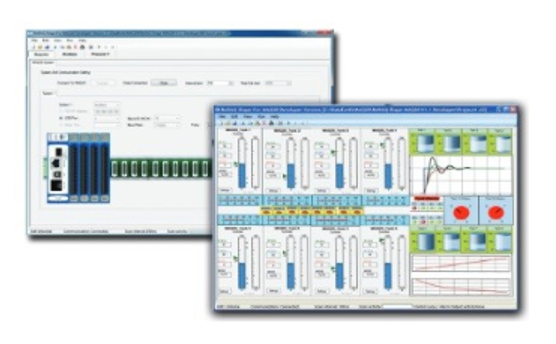 Figure 3: ReDAQ Shape software interface. Source: Dataforth Corporation
Dataforth offers both free and one-time fee/no subscription software tools for seamless configuration and integration.
Free software
- Python API, LabVIEW VIs, OPC Server — available for download at the Dataforth Corporation website.
ReDAQ Shape (including a free demo download)
- Rapid setup and visualization in three steps using 18 drag-and-drop tools
- Ideal for quick test creation, live data display and analysis
Performance and reliability that lead the industry
With accuracy from ±0.03% to ±0.06%, the MAQ20 delivers best-in-class precision — typically at one-third to one-half the cost per channel of competing systems with high channel counts.
All field I/Os are protected to 240 Vrms, and internal optical and transformer isolation withstands 1,500 Vrms continuous common-mode voltage, ensuring robust protection from electrical interference.
Every MAQ20 module undergoes 100% burn-in testing at 85° C for 48 hours prior to shipment, guaranteeing long-term stability and reliability. Once deployed, modules require no recalibration over their service life.
Beyond the MAQ20: Building the complete DAQ solution
While the MAQ20 defines excellence in modular DAQ systems, Dataforth’s expertise extends to a broad portfolio of signal conditioning and data communication solutions.
The company’s DAQ System Builder allows users to design and configure complete systems online before purchase — streamlining the engineering process from concept to deployment.
Conclusion
Since 1984, Dataforth Corporation has set the benchmark for signal conditioning, data acquisition and data communication solutions. With a focus on innovation, reliability and customer success, Dataforth continues to deliver technology that transforms measurement and control applications worldwide. Visit the Dataforth Corporation website for more information.

This is an interesting overview of the MAQ20 data acquisition system. The combination of modular design, scalability, and industrial-grade reliability makes it a strong option for demanding measurement and control applications.