Guide to troubleshooting in pH labs: Common issues and solutions
Parul Chhaparia | October 09, 2025Troubleshooting is a natural, almost instinctual process. Imagine you're at a breathtaking scenic overlook, phone in hand, trying to snap the perfect photo. Just when you are ready with the frame, the camera app crashes.
Similarly, you're driving down the highway, and suddenly, an unfamiliar error message flashes on your car's dashboard. In both situations, our first reaction is often the same: we restart the device. This simple act of restarting is a basic, yet powerful, form of troubleshooting. It's an intuitive approach to problem-solving, a fundamental part of how we interact with technology and the world around us.
The word "troubleshooting" itself perfectly captures its essence: "trouble" referring to the issues and difficulties we face, and "shoot" implying a swift, targeted action to resolve them.
In pH laboratories, ensuring accurate and reliable measurements is paramount. However, there are many errors that are frequently observed, impacting the performance of pH sensors and electrodes. These issues typically fall into three broad categories: calibration problems, measurement inconsistencies and mechanical faults.
Calibration issues
Calibration is one of the most critical steps in the pH measurement process. Some of the common calibration-related problems include out-of-range slope values and cell constants, inaccurate readings and calibration errors. These can be due to many factors, including damaged sensors and poor-quality buffers.
Troubleshooting methods
The first step in troubleshooting calibration issues is to verify the quality and appropriateness of buffer solutions. Using fresh, uncontaminated buffers is essential. It is equally important to confirm that the correct buffer group is used for the specific application and that buffers are applied in the proper sequence, especially when automatic buffer recognition is disabled. One also needs to maintain a stable temperature — preferably room temperature — during calibration, to ensure consistent pH values.
Step two can be to check the miliVolt (mV) values. A reliable electrode should exhibit specific mV responses in standard buffer solutions. For example, immersing the electrode in pH 4.01 and pH 7.00 buffers should yield a difference of at least ±180 mV relative to the zero potential. Slope values for pH are acceptable from 95% to 105% and an offset of 0 ± 30 mV.
The third step will be to ensure that the calibration mode corresponds to the electrode and application requirements. For instance, choose between linear or segmented calibration modes as appropriate.
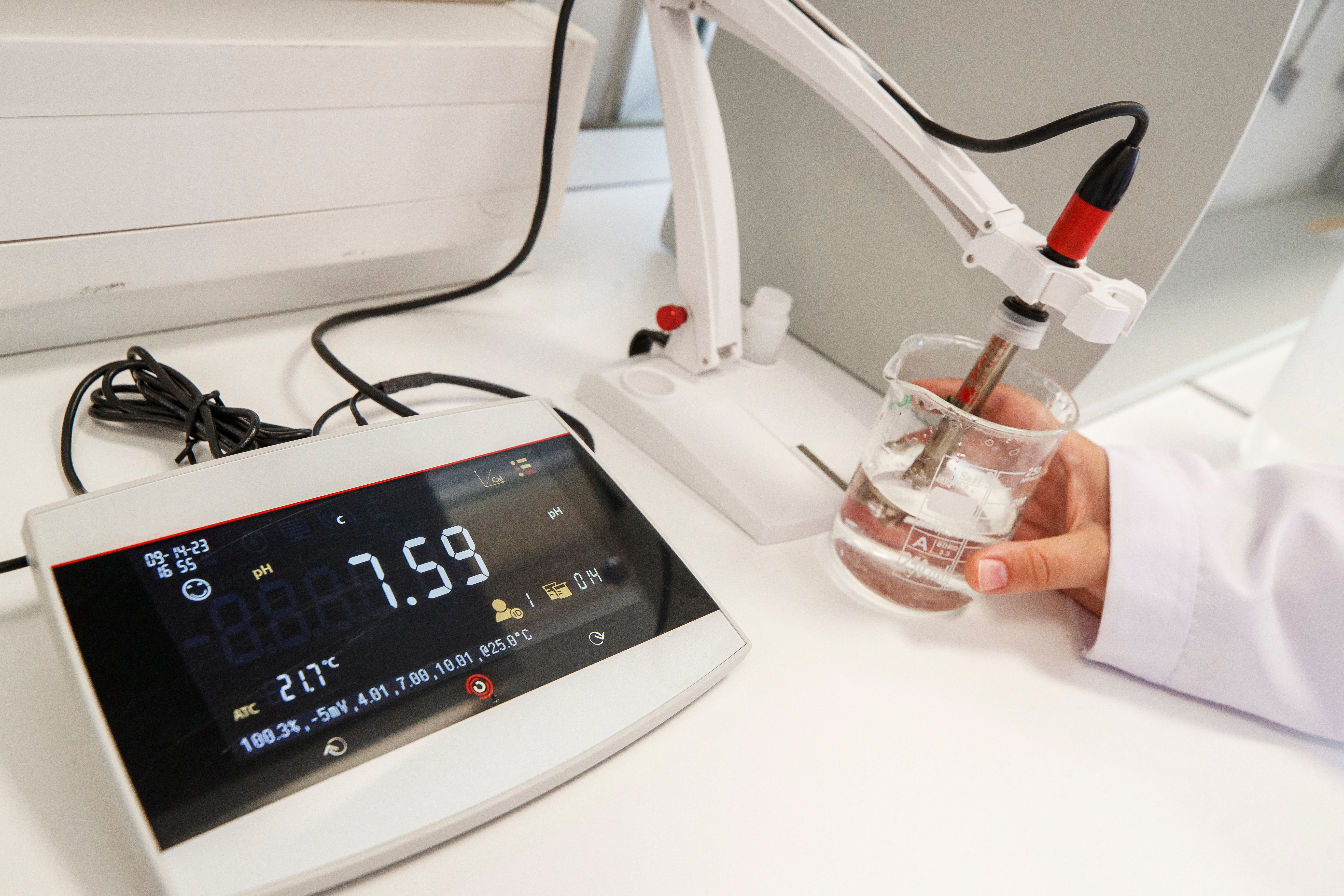 Ensuring accurate pH measurements starts with precise calibration. Use fresh buffers and verify mV response for optimal electrode performance. Source: Suzi/Adobe Stock
Measurement issues
Measurement problems — such as drift, inconsistent readings and slow response times — do affect data quality. These issues often stem from electrode suitability, sample temperature variations and improper calibration relative to the sample matrix.
Troubleshooting methods
The first step to troubleshoot such issues is to check the compatibility of the electrode with the sample matrix. Electrodes are designed differently for different samples. Therefore, if an inappropriate electrode is being used in a particular sample, it can lead to unstable or inaccurate readings. Resources like www.electrodes.net select the right sensors.
The second step is to check the sample temperature stability. pH values are temperature-dependent; thus, temperature fluctuations during measurement can cause drifting readings. It is essential to allow the sample to reach a constant temperature before measurement.
As the third step, check the measurement range and suitability of the buffers. It is important to know the expected range of samples as the calibration range should be wider than the pH range of the samples.
Mechanical issues
These can consist of sensor damage, aging, fouling, crystallization and all other which degrade electrode performance over time.
Troubleshooting methods
The first and foremost step will be to ensure that there is sufficient reference electrolyte, particularly for refillable electrodes. The electrolyte level should be above the sample level, and the safe lock should remain open during measurement. Inspect electrodes for precipitates or salt deposits, which can be cleaned using distilled water.
The next step will be to look for any cable and connection-related issues. Loose or damaged cables can introduce signal noise or loss.
Additionally, check the membrane of the pH electrodes and make sure they are not damaged or contaminated. Cleaning with ethanol followed by rehydration in a diluted acidic solution (e.g., dilute HCl) helps restore function.
Conclusion
Unlike the outside world, troubleshooting in a lab environment requires a structured approach focusing on calibration, measurement and mechanical factors. Key practices such as using fresh buffer solutions, maintaining stable sample temperatures, selecting appropriate electrodes and properly caring for sensors are essential for ensuring accurate pH measurements and prolonging electrode lifespan.