Scientists create plant-based plastics for everyday packaging
Marie Donlon | October 20, 2025A team of researchers from Monash University is transforming food waste sugars into natural plastic films that promise to potentially replace petroleum-based packaging.
With the promise of offering compostable alternatives to commonly used plastics for food and agricultural films, the new biodegradable plastic was created by converting food waste sugars into polyhydroxyalkanoates (PHA) biopolymers.
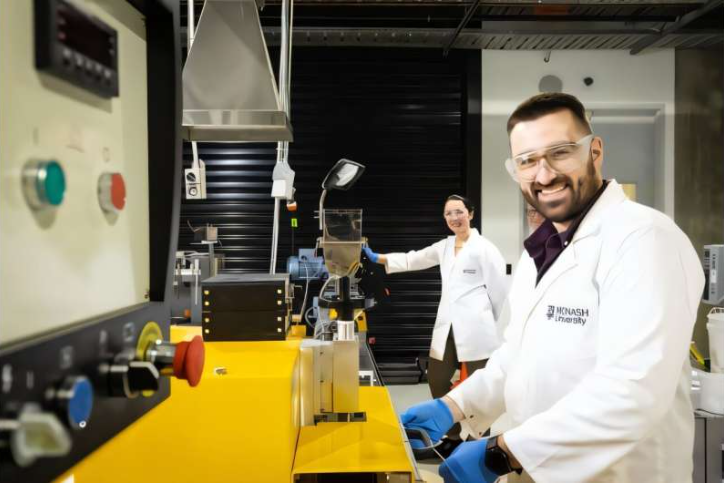 Source: Monash University
To create this new plastic, the team selected different bacterial strains and blended their polymers, thus producing films that function like conventional plastics and that can be molded into other shapes or solids.
The team explained that they fed two soil-dwelling bacteria — dubbed Cupriavidus necator and Pseudomonas putida — a balanced "diet" of sugars with a blend of salts, nutrients and trace elements.
Once nourished and subsequently fattened up, the bacteria began stockpiling natural plastic within their cells. The team then "milked" these plastics out using solvents, and then cast them into 20 micron thin films. The team then tested the film’s stretchiness, strength and melting behavior.
"This research demonstrates how food waste can be transformed into sustainable, compostable ultrathin films with tunable properties. The versatility of PHAs means we can reimagine materials we rely on every day without the environmental cost of conventional plastics," the researchers explained. "By tailoring these natural plastics for different uses, we're opening the door to sustainable alternatives in packaging, especially where they can be composted along with food or agricultural waste."
The research, which is detailed in the article “Bacterial species-structure-property relationships of polyhydroxyalkanoate biopolymers produced on simple sugars for thin film applications,” appears in the journal Microbial Cell Factories.