Grounding your operation: Hose selection for dry bulk applications
September 26, 2025In industrial settings, hoses serve as indispensable components in the safe and effective transfer of liquids, powders, gases and even air. Selecting the correct hose and ensuring it is properly used and maintained is imperative to minimizing operational risks, reducing downtime and ensuring worker safety. Dry material handling processes in particular present a heightened risk of electrostatic discharge (ESD), which can lead to fires, explosions, equipment damage and injury.
Focusing specifically on the importance of prioritizing static safety in these applications, with an emphasis on how careful consideration of hose selection — including the use of static-dissipative materials, grounded fittings and proper assembly procedures — can help mitigate these risks. Exploring essential practices such as hose inspection, maintenance routines and compliance with relevant safety standards will further mitigate risks.
Understanding the criteria for proper hose selection not only meets performance requirements but also enhances plant safety by mitigating static hazards in dry material handling environments.
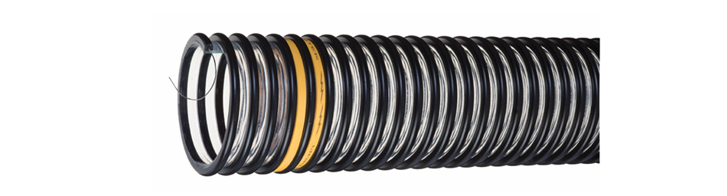 Figure 1. Kuriyama Voltbuster series food-grade dissipative polyurethane material handling hose with grounding wire. Source: Kuriyama
NAHAD and the Hose Safety Institute
The National Association for Hose and Accessories Distribution (NAHAD) plays a pivotal role in promoting industry-wide best practices. Through its Hose Safety Institute (HSI), NAHAD provides guidelines on hose assembly, testing and maintenance — many of which are reflected in the STAMPED selection method and inspection protocols. Partnering with NAHAD HSI certified distributors helps ensure that hose assemblies are fabricated and maintained to the highest standards of safety and reliability.
Understanding hose types and characteristics
Industrial hoses vary widely in terms of materials, flexibility, durability and intended applications. Understanding these distinctions is critical to proper hose selection.
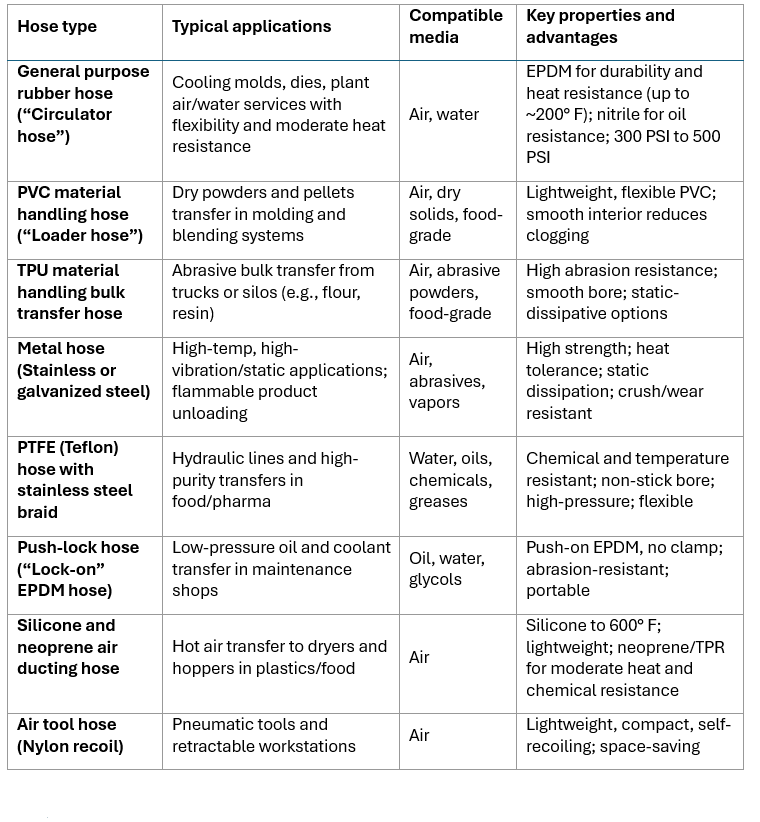 Table 1: Hose types and applications. Source: Kuriyama
The STAMPED selection method
A widely accepted approach to industrial hose selection is the STAMPED method. This structured approach ensures that every application parameter is properly documented and evaluated:
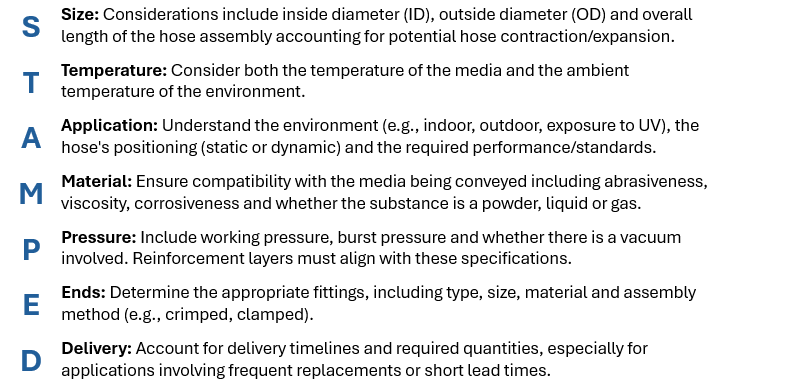
Complete STAMPED information equips distributors and engineers with the data necessary to provide the safest, most effective hose solution.
Key selection considerations
The following additional considerations help refine hose choices by complementing the STAMPED approach.
Interior surface
A smooth interior hose wall promotes efficient media flow and simplifies cleaning. Corrugated interiors, often found in ducting hoses, can trap particulates and create turbulence.
Weight
Heavier hoses can be difficult to handle and may require lifting equipment. This is particularly relevant for large-diameter hoses and long lengths. Thermoplastics tend to be lighter (approximately half the weight) than rubber or metal alternatives.
Noise
High-velocity media, especially in metal hoses, can create loud operational environments. Thermoplastic hoses help reduce noise levels and improve workplace ergonomics and safety.
Flexibility
Consider the hose's minimum bend radius. Stiff hoses in tight spaces can lead to premature failure due to kinking or fatigue.
The following table compares common hose types across key performance attributes to assist in selecting the most suitable hose for specific industrial applications.
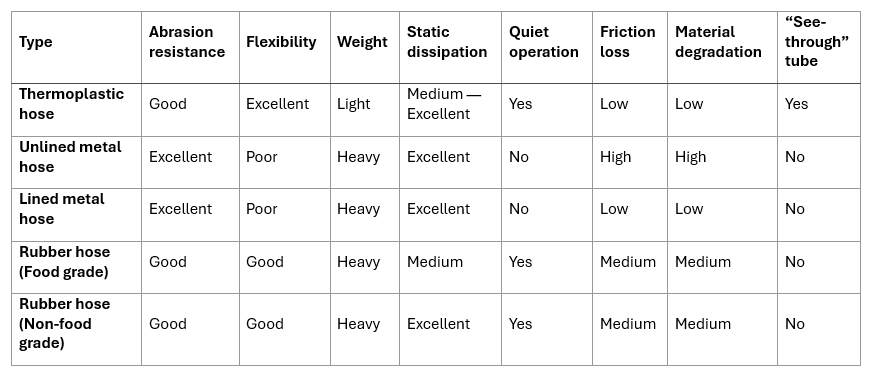 Table 2: Common hose types. Note: Rankings are generalizations based on common material properties and may vary by design and application. Always consult with the hose manufacturer for actual specifications and suitability for an application. Source: Kuriyama
Static dissipation and grounding
The buildup of static electricity, which can lead to ESD, can pose serious hazards during industrial hose operations, particularly in dusty or flammable environments. The three primary types of potential hazards from ESD include:
- Dust fires and explosions: ESD can ignite combustible dust leading to fires or explosions.
- Physical harm: ESD can cause electric shocks or burns to individuals working near the hose.
- Hose damage and leaks: ESD can create microscopic pinholes in the hose wall, resulting in leaks during liquid transfer.
Implementing effective static control strategies is essential to preventing fires, injuries and equipment failures caused by ESD. By aligning with industry best practices such as those outlined in National Fire Protection Association (NFPA) 660, facilities can ensure that a comprehensive approach to ESD risk mitigation is applied.
NFPA 660 consolidates six dust standards, mandating DHAs, dust control, training and static safety for facilities handling combustible dusts. It requires a systems approach to ESD risks — covering grounding, materials, environmental factors and validation — especially for dry bulk transfer systems.
Proper grounding techniques
To help ensure effective static control, hoses with grounding wires must be properly grounded by extracting and securely connecting their embedded grounding wires during assembly. Continuity should be verified using low-resistance ohmmeters to confirm the entire system — including both hose fittings and connected equipment — maintains a reliable ground path. Regular inspections must check for damaged or broken grounding wires, as visual assessment alone is insufficient. Testing is essential at all connection points since proper grounding cannot be assumed.
Material conductivity and static hazards
The conductivity of hose materials directly impacts static charge accumulation and discharge risks. However, static safety depends not only on material properties but also on system design, environmental factors and the balance between charge generation and dissipation.
Propagating brush discharge (PBD)
Thick-walled hoses or pipes with high dielectric strength can accumulate significant charge, leading to PBD — a high-energy spark (greater than 4 mJ). This risk escalates with smaller particle sizes, high flow velocities and sharp bends in the hose. Mitigation would include using thinner-walled hoses for high-velocity transfers, ensuring continuous grounding and avoiding configurations that trap charge (for instance, tight bends or isolated conductors).
Charge generation factors
Higher velocities and smaller particles (increased surface area) dramatically elevate charge generation. The measure that might help reduce charge generation rate includes reducing flow velocity, minimizing bends and maintaining greater than 65% relative humidity (RH) where possible.
Minimum ignition energy (MIE)
Every combustible material has a unique MIE. If a static discharge’s energy exceeds the MIE of the conveyed dust or vapor, ignition can occur. To mitigate this risk, partner with safety experts to determine the MIE of handled materials and select hoses tested to prevent discharges above this threshold.
Material selection
Hose conductivity directly determines whether static charge safely dissipates, gradually releases or dangerously accumulates, which is critical for preventing fires/explosions in combustible environments.
- Conductive (metal, carbon-filled polymers): Instantaneous charge dissipation; ideal for high-risk environments.
- Static-dissipative (polyurethane with grounding wires): Slower discharge; suitable when charge generation is moderate.
- Non-conductive (standard PVC): Retains charge; avoid in combustible dust applications.
Use conductive hoses for flammable materials, static-dissipative for powders and avoid non-conductive hoses in combustible environments.
Environmental factors
Static charge accumulation is also heavily influenced by environmental conditions. Key factors to consider include:
- Humidity: Low humidity (less than 40% RH) significantly increases static buildup, as dry air lacks the moisture needed to dissipate charge. Facilities in arid climates or during winter months should implement enhanced monitoring and grounding checks.
- Temperature: Cold environments can reduce material conductivity, exacerbating static retention.
- Dust accumulation: Combustible dust layers act as both fuel and charge traps, requiring strict housekeeping per NFPA 660.
Testing and validation
Regular testing ensures that static control measures remain effective. Surface resistance meters verify hose or material resistivity, while low-resistance ohmmeters confirm grounding continuity. Continuity testers check for broken grounding wires in assemblies, with testing frequency aligned to risk levels.
It is crucial to evaluate each hose and system on a case-by-case basis, factoring in operating conditions, material properties and hose construction.
Cleaning and sanitation practices
 Figure 2. Effective hose sanitation is essential for controlling microbes and allergens in hygienic applications. Source: DedMityay/Adobe Stock
Proper hose cleaning is essential in food, pharmaceutical and other sanitary applications to prevent microbial growth, allergen cross-contact and meet strict regulatory requirements. This requires validated Sanitation Standard Operating Procedures (SSOPs) compliant with FDA, USDA and 3-A standards. Key requirements include documented procedures, employee training on TACT principles and verification systems to ensure compliance with FSMA and HACCP. Effective cleaning balances four critical TACT parameters:
- Time: Contact duration
- Action: Mechanical force (flow turbulence or scrubbing)
- Chemical: Type and concentration
- Temperature: Optimized heat level
In sanitary processing, cleaning methods are critical to maintaining product integrity and equipment performance. The two primary cleaning approaches used are:
- CIP (clean-in-place): Automated circulation through fixed systems (tanks, pipes, hoses) without disassembly, reducing labor and ensuring consistency.
- COP (clean-out-of-place): Manual cleaning in wash tanks for components requiring disassembly, enabling thorough inspection.
Hose assembly, traceability and maintenance
A systematic approach to hose lifecycle management safeguards equipment and personnel. Implement these protocols to prevent failures and ensure static safety and compliance with MAHAD and OSHA:
- Assembly protocols: Extract and crimp grounding wires (not helical suction wires); verify continuity with ohmmeters and pressure-test to 1.5 times working pressure.
- Traceability: Tag hoses with serial numbers; log manufacturing dates, tests and inspections.
- Maintenance: Visually inspect hoses for damage daily. Check grounding wire continuity with ohmmeters and replace hoses showing wear or failed tests on a regular basis.
Kuriyama of America
As an industry leader in hose technology and safety, Kuriyama provides expert guidance and engineered solutions to help facilities implement these critical practices while ensuring compliance with NFPA, FDA and 3-A standards. To learn more about the Voltbuster hose or for tailored recommendations and technical support, contact Kuriyama’s team of specialists.