Can pH be negative? The truth behind negative pH measurements
Rajnigandha Shende, courtesy of Mettler Toledo | October 31, 2025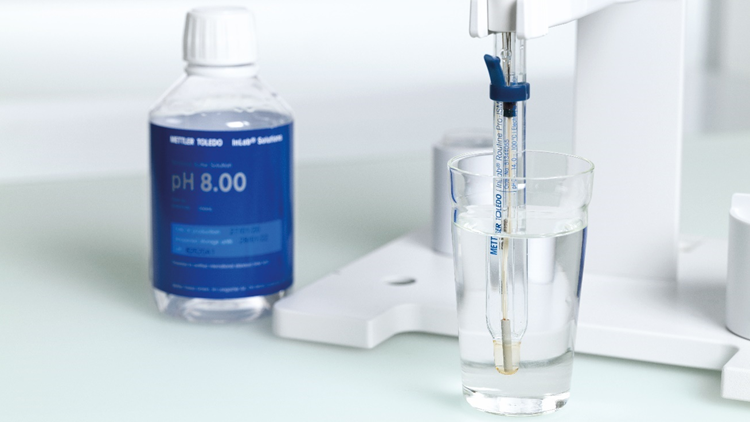 Source: Mettler Toledo
What happens when chemistry pushes past the boundaries of what we thought was measurable?
In the field of chemical analysis, pH measurement is one of the most fundamental and widely used techniques. Whether formulating pharmaceuticals, treating wastewater or manufacturing specialty chemicals, knowing the acidity or alkalinity of a solution is critical.
But as industries push boundaries and work with increasingly aggressive substances, a fascinating question arises: Can a pH probe detect negative pH?
To answer that, let's first explore the science behind pH and the engineering behind the probes that measure it. Understanding the limits of these tools is just as important as understanding the chemistry itself.
What does “negative pH” actually mean?
Most are familiar with the pH scale ranging from 0 to 14. A pH of 7 is neutral, values below 7 are acidic, and those above 7 are basic. But this scale isn’t a strict boundary, it’s a guideline based on the concentration of hydrogen ions (H⁺) in a solution.
The formula for pH is: pH= - log [H+]
So, if the concentration of hydrogen ions exceeds 1 mole per liter, as in a 12 M hydrochloric acid solution, the calculated pH becomes negative (around -1.08). This isn’t a mistake or a myth. It’s a mathematically valid result that reflects extreme acidity.
But here’s the catch: just because it can be calculated, doesn’t mean negative pH can be accurately measured with a standard pH probe.
Why standard pH probes struggle in extreme acidity?
A typical pH probe consists of a glass electrode and a reference electrode. The glass membrane interacts with hydrogen ions in the solution, generating a voltage that corresponds to pH. This voltage is compared to the reference, and the result is displayed.
However, in highly acidic environments, several complications arise.
- Electrode saturation: The glass membrane can become overwhelmed by the sheer concentration of H⁺ ions, leading to nonlinear or unstable readings.
- Liquid junction potential: The reference electrode may develop erratic potentials at the junction, introducing significant error.
- Lack of calibration buffers: There are no standardized buffer solutions for pH values below 1, making calibration nearly impossible.
- Ion activity vs. concentration: In concentrated acids, the actual activity of hydrogen ions deviates from their molar concentration due to strong ionic interactions.
These factors make it difficult for conventional pH probes to reliably detect negative pH values, even if the theoretical calculation is straightforward.
Industrial implications
Industries that use highly acidic solutions require accurate pH measurement. This includes fields like semiconductor manufacturing, battery development and superacid chemistry. It supports quality control. It ensures compliance with regulatory standards.
Misreading pH in these environments can lead to process inefficiencies. Equipment may suffer damage. In some cases, hazardous conditions can arise. For example, chemical etching processes require precise acidity levels to achieve specific material properties. In pharmaceutical production, pH control directly affects the stability and effectiveness of formulations.
In such scenarios, achieving reliable pH measurement involves more than using a basic sensor. Factors like probe design, calibration practices, and material compatibility must be carefully considered to maintain consistent and accurate performance.
What to look for in a pH sensor
If an application involves highly acidic solutions, choosing the right sensor is critical. Here are a few features to prioritize.
- Extended pH range: Look for probes rated for pH 0 to 14 or lower.
- Chemical-resistant materials: PTFE or PVDF housings can withstand aggressive acids.
- Custom calibration options: Some manufacturers offer factory calibration or custom buffers for extreme conditions.
- Integrated temperature compensation: Ensures consistent readings even in thermally dynamic environments.
These enhancements significantly improve performance. However, measuring negative pH remains a complex challenge. It continues to push the boundaries of sensor technology.
Real-world applications
Negative pH isn’t just a theoretical curiosity. It appears in:
- Superacid chemistry: Used in fuel research and organic synthesis.
- Advanced battery systems: Some electrolytes are extremely acidic.
- Industrial cleaning: Ultra-concentrated acids are used for descaling and surface preparation.
In these environments, precision isn’t optional - it’s essential. Therefore, when working in environments where precision is critical, reliability matters. This is especially true in extreme pH conditions. A high-performance instrument is essential.
Mettler Toledo’s pH meter SevenDirect offers advanced solutions designed to meet these challenges. The wide range of pH sensors are engineered for durability, accuracy, and performance in demanding applications, helping you maintain control and confidence in every measurement.
To learn more about pH measurement, download our pH Measurement Theory Guide. To contact the author of this article, email pHmatters@mt.com