AI-triggered airbag system forms protective bubble in plane crashes
Marie Donlon | September 18, 2025An artificial intelligence (AI)-powered airplane crash survival system that promises to protect airline passengers in the event of a crash has been developed by engineers from BITS Pilani’s Dubai campus.
The system, developed under the title Project REBIRTH, relies on external airbags that inflate, thus enveloping the aircraft and reducing impact during abrupt landings.
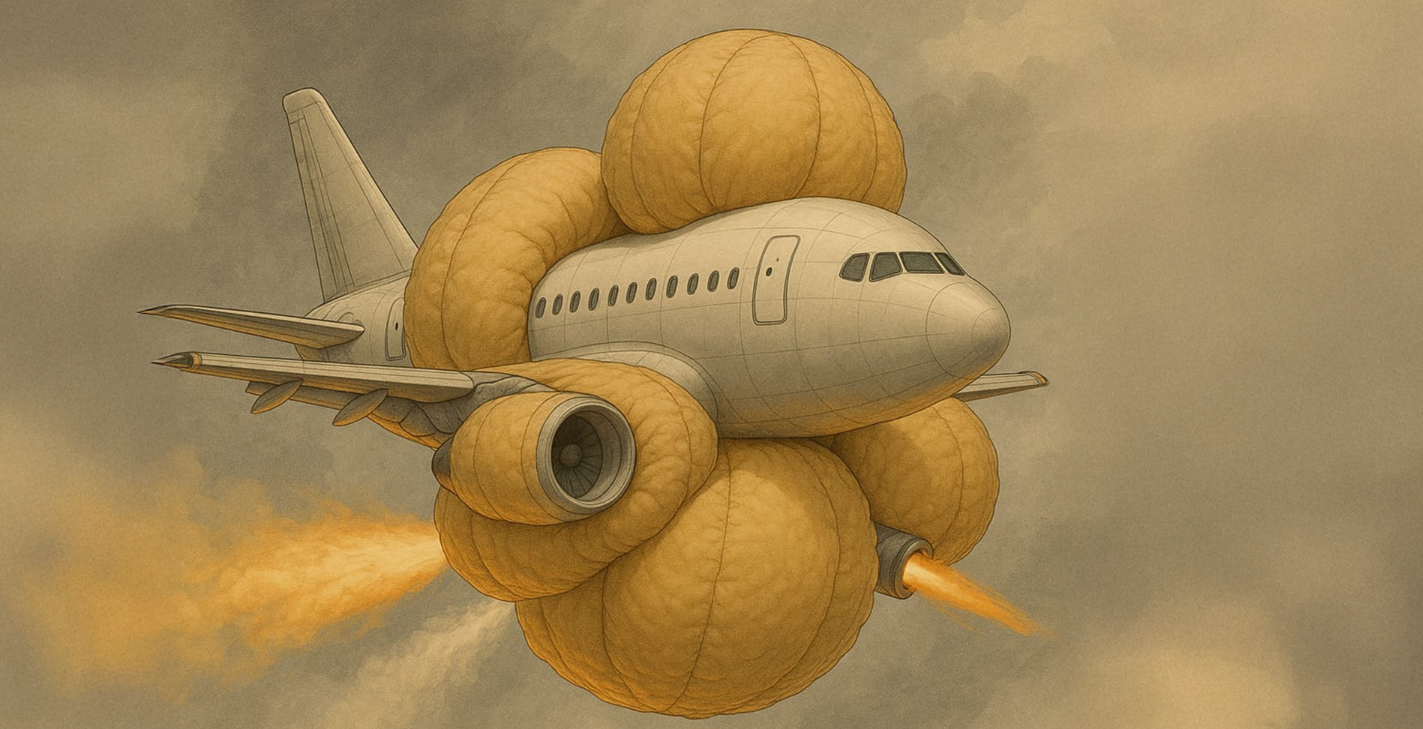 Source: Project REBIRTH
To enable this, the system uses AI and sensors to determine when a crash is imminent and then automatically deploys the airbags if the plane falls below 3,000 ft. The system can also be manually deployed by pilots, if necessary.
According to its developers, the system monitors factors such as engine status, direction, speed, altitude, temperature and pilot activity before making a deployment decision. In the event that the system determines a crash is imminent, the airbags — which are composed of layers of Kevlar, TPU, Zylon and non-Newtonian smart fluids — will deploy from the plane’s nose, belly and tail in under two seconds, absorbing impact and reducing damage to both the aircraft and passengers.
Further, if the plane’s engines are operational, reverse thrust reduces the speed of the aircraft. If the plane’s engine fails, gas thrusters will engage to both reduce speed and stabilize the plane. As soon as the plane lands, a combination of bright orange paint, infrared beacons, GPS and flashing lights will quickly guide rescue teams to the landing site.
The developers have built a 1:12 scale prototype that features sensors, microcontrollers and carbon dioxide canisters that are all managed by AI software. As the prototype system reacts to changes in speed, vibration and force, safety measures are sequentially activated.
During computer simulations of the system, the team determined that the prototype could potentially reduce crash impact by more than 60%.
“Today, REBIRTH is ready for scaled testing, with schematics, simulations, and materials data prepared,” the team said.