Pop up factories to set assembly trends?
August 25, 2025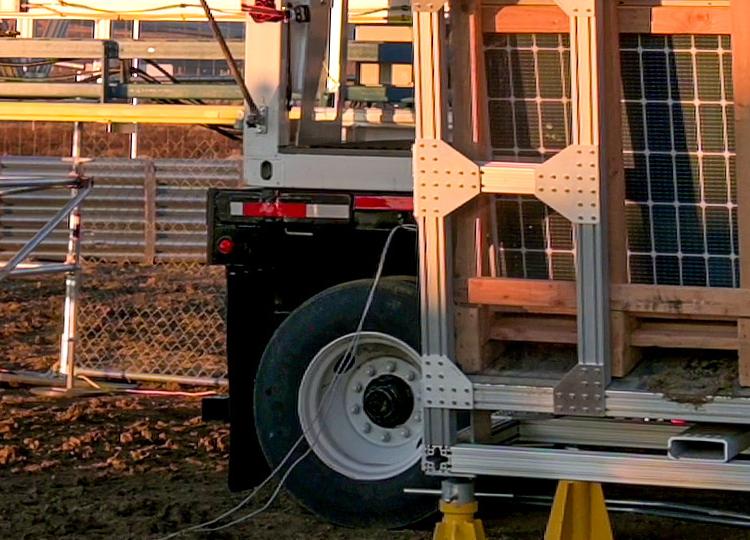 Image Source: Charge Robotics/MIT
As the cost of solar panels has decreased in recent decades, install fees have accounted for a larger portion of the technology's overall price. The lengthy installation process for solar farms is emerging as a major impediment in the adoption of solar energy.
Charge Robotics is currently producing solar installation factories on demand to speed up the process of erecting large-scale farms. The company's factories are sent to utility solar project sites, where equipment such as tracks, mounting brackets, and panels are automatically built. A robotic vehicle automatically places the finished product, which is equivalent to a completed section of solar farm, in its ultimate location. Pop up assembly.
“We think of this as the Henry Ford moment for solar,” says CEO Banks Hunter ’15, who founded Charge Robotics with fellow MIT alumnus Max Justicz ’17. “We’re going from a very bespoke, hands on, manual installation process to something much more streamlined and set up for mass manufacturing. There are all kinds of benefits that come along with that, including consistency, quality, speed, cost, and safety.”
Last year, solar energy accounted for 81 percent of new electric capacity in the U.S., and Hunter and Justicz see their factories as necessary for continued acceleration in the industry.
The founders say they were met with skepticism when they first unveiled their plans. But in the beginning of last year, they deployed a prototype system that successfully built a solar farm with SOLV Energy, one of the largest solar installers in the U.S. Now, Charge has raised $22 million for its first commercial deployments later this year. The two mechanical engineering majors have been collaborating since 2017.
“We are hitting the limits of solar growth because these companies don’t have enough people,” Hunter says. “We can build much bigger sites much faster with the same number of people by just shipping out more of our factories. It’s a fundamentally new way of scaling solar energy.”