An enhanced approach to the continuously variable transmission
August 01, 2025The idea, like many others, had its earliest recorded manifestations in the notebooks of Leonardo da Vinci, the gifted polymath of the Renaissance era, whose engineering sketches were far ahead of their time. Da Vinci envisioned the helicopter, the double-hull ship design, and the practical use of solar power. He is also credited with inventing an early version of the continuously variable transmission, or CVT — a mechanical device for driving vehicles without fixed gears.
By its nature, a CVT changes seamlessly across a continuous range of effective gear ratios, resulting in smoother and more efficient acceleration than what is possible with a traditional automatic transmission. In the late 19th century, automotive pioneer Milton Reeves utilized the concept to control the speed of saws in a sawmill, acquiring knowledge he would later apply to the development of one of the earliest American automobiles — a “motorcycle” with a belt-and-pulley based variable transmission that he believed made it superior to Henry Ford’s fixed-gear invention.
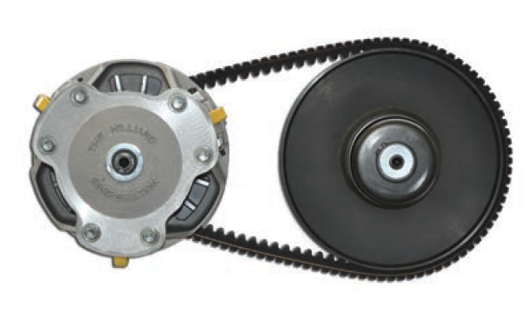 Figure 1. The basic CVT design includes a drive clutch, a driven clutch and a belt or chain to connect to them. Source: Hilliard Corp.
Long used in industrial equipment to enable engine operation at optimal RPM despite changes in speed and load, CVTs offer simpler designs, longer internal component lifespans, and greater durability than their fixed-gear counterparts. The basic CVT design includes a drive clutch, also known as a primary clutch; a driven clutch, also known as a secondary clutch; and a belt or chain to connect them. Each clutch is made up of two cone-shaped halves with movable sheaves. By moving the sheaves of one clutch closer together while moving the sheaves of the other clutch farther apart, it becomes possible to continuously adjust the gear ratio — all the while keeping the engine within a defined range for maximum efficiency.
With their user-friendly design, CVTs are also a perfect match for small powersports equipment like snowmobiles and all-terrain vehicles (ATVs). The inherent engine optimization feature of CVTs allows manufacturers to tune them for improved fuel economy or enhanced power. Higher power capabilities are achieved in low gear ratios, which result from widening the sheaves of the drive clutch and narrowing those of the driven clutch; greater economy is achieved at high gear ratios, which occurs by narrowing the drive sheaves and widening the driven.
This is not to say that there are no drawbacks to selecting a traditional CVT design over other types of automatic transmissions. While the variable gear ratios provide a wider range of torque, that torque can also put strain on the belt, leading it to slip and deteriorate over time. The potential for belt wear results in a greater need for maintenance, and repairs may also involve more expensive replacement parts.
Issues like these can be addressed through innovative design. That’s the approach taken by the Hilliard Corporation, a manufacturer and distributor of motion control and filtration products. Hilliard incorporates patented strategies, such as its belt protection technology and its centrifugal clutch design, to tackle some of the most significant CVT challenges in two separate markets: industrial equipment and powersports.
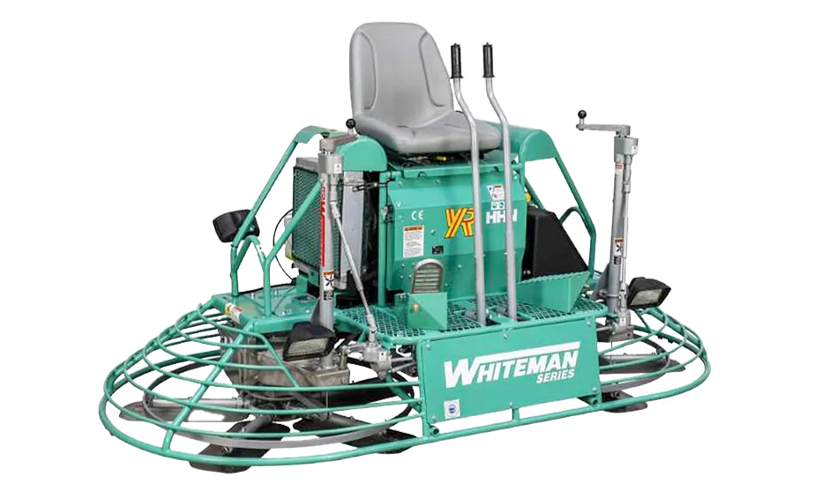 Figure 2. Reliability and longevity are significant pain points for CVTs found in ride-on industrial equipment such as power trowels. Source: Hilliard Corp.
Industrial equipment
Reliability and longevity present considerable challenges for CVTs used in ride-on industrial equipment like power trowels, floor grinders/polishers and light earthmovers.
Belt life is a key area of concern. In a traditional CVT design, the belt sits loosely on its roller at startup; as engine RPM increases, the sheaves of the primary (drive) clutch come together to pinch the belt and transmit power to the secondary (driven) clutch. Perhaps unsurprisingly, most belt damage occurs during the startup stage; there is potential for slippage, heat buildup and smoking, as well as belt breakage under high-torque conditions.
Hilliard tackles this challenge with a patented belt protection technology that ensures constant belt pinch, from startup and idle through continuous gear ranges and back down to idle. This minimizes scrubbing (slipping) during stressful situations, including startup and overload periods. It also lessens the risk of unexpected belt breakage, which can lead directly to work delays and downtime, as well as increased maintenance costs.
One unique aspect of Hilliard’s belt protection technology is that it employs a torque-limiting mechanism to provide controlled slippage: the mechanism slips instead of the belt, absorbing overload conditions. This same mechanism can handle 150% more torque at startup, resulting in 150% greater efficiency. Additionally, because the torque-limiting mechanism is independent of the shift mechanism, platform tuning can be conducted without affecting the protection range.
Similar dynamics are utilized in Hilliard’s patented clutch technology, which provides positive engagement of power transfer through micro-slipping until it secures the necessary friction to drive. This ensures a more consistent distribution of the power curve, facilitating a smoother flow of power delivery and higher breakout force. Hilliard’s patented centrifugal system also plays a role in ensuring performance under varying load conditions. Each of these systems working together enables a power trowel to overcome initial surface tension and to adapt to changes in surface tension through automatic adjustments within the desired gear ratios.
Outside variables and profit margins
Overall, these innovations result in CVT-powered industrial equipment that is not only more reliable and better equipped to handle environmental stresses but also simpler to operate. In the field where various external factors come into play, this can significantly impact profit margins.
Consider, for instance, the variability of concrete. The depth of a concrete pour affects its surface tension. It will also set differently in various parts of the world due to environmental factors, such as sunlight exposure and atmospheric moisture, among others. An operator using industrial equipment powered by a traditional CVT may not realize that adjustments are necessary to compensate for factors like these, increasing the potential to introduce reverse forces likely to impact belt life.
Thinking again about a power trowel, one can envision its blades set at a less-than-ideal angle for concrete tension or wetness and receiving reverse force as they tilt to collect more material. An operator is likely to respond by gradually increasing power — a common technique for easing into a wetter slab or achieving a bigger “bite” with the blades. However, if power is increased too slowly, the reverse feed from the secondary clutch will prevent the sheaves from breaking the initial coefficient of friction. This can cause the belt to spin on the sheaves and begin smoking, thereby reducing its lifespan. Conversely, if power is increased too quickly, a shearing effect will arise as the sheaves are compressed together, creating the potential for belt breakage. Any of these dynamics can also occur too swiftly for the operator to notice and adjust for, further raising the risk of breakage when the engine reaches full power.
More importantly, this scenario may be just the beginning of a larger “chain reaction.” After a belt break, heavy ride-on equipment may become stranded in a wet concrete slab, making it crucial to rescue the equipment operator and call in a crane to remove the machinery. This situation also needs immediate attention to prevent further damage to the pad: If the concrete solidifies with the trowel blades embedded, the pad will need to be cut and redrilled for new rebar, while the damaged section will have to be re-poured with new concrete — assuming that concrete can be quickly procured from a nearby supplier.
The Hilliard CVT, however, overcomes many of these limitations by design. With its continuous operation, the system maintains torque regardless of variables such as job site location and load specifications. As noted above, it also compensates for changes in surface tension through automatic gear ratio adjustments. A power trowel equipped with a Hilliard CVT produces a consistent surface finish, no matter the condition of a concrete slab, and end users have reported belt longevity reaching up to 1,000 hours compared to traditional CVT designs. Moreover, the enhanced reliability of these machines decreases downtime and maintenance costs while reducing the number of new machines a company needs to buy.
Powersports
 Figure 3. With their easily operated design, CVTs are a natural fit for small powersports equipment such as all-terrain vehicles (ATVs). Source: Hilliard Corp.
For the consumer market focused on recreational and utility vehicles, Hilliard employs its tight belt technology for belt protection along with a starter clutch design akin to what’s used in industrial equipment. The starter clutch ensures smooth power delivery at startup, resulting in a less jerky ride for leisure users — applications can thus be transformed from “weekend warrior”-ready to family-friendly. For utility use, this translates to the capacity to overcome more friction, allowing for the transport of heavier weights in applications such as trailer pulling or log hauling — and improved traction over rough terrain.
Additionally, Hilliard provides an optional one-way, heavy-duty overrunning clutch integrated into the primary clutch assembly to help manage vehicle operation and manage extreme torque spikes. The overrunning clutch spins freely in one direction when the input starts to spin faster than the output, using the engine's compression to deliver positive engine braking that is both seamless and instantaneous.
Those with experience in ATVs outfitted with traditional CVTs will likely be familiar with the need to maintain a delicate balance between throttling and braking. When a user releases the throttle, a traditional CVT back drives from the secondary clutch to the primary, providing a measure of braking until engine RPM drops below sheave engagement. However, because the belt is not in constant contact with the sheaves, braking loss occurs when the belt disengages from the drive. If the user then attempts to reengage the engine while going down a hill, the belt can be seized so forcefully that there is potential to flip the vehicle or lose control on the way down. In contrast, the Hilliard design provides positive engine braking from high RPM down to idle.
The unique Hilliard CVT design is an ideal fit for new vehicles built from the ground up. Original equipment manufacturers (OEMs) in both the powersports and industrial equipment sectors can also choose to transform their existing vehicle models by integrating a traditional CVT that incorporates several Hilliard enhancements. Refined over two years of development, this model utilizes a cast aluminum design instead of stamped metal or billet (stamped metal is an entry-level approach suitable for lower-power and torque applications where longevity is not a primary concern, while billet is expensive with no inherent advantages over aluminum for CVTs). This model can also accommodate stock tunings without requiring modifications.
This advanced traditional CVT does not include the patented belt protection technology or positive engine braking found in Hilliard’s flagship offering, but various other nuances distinguish the Hilliard model. These nuances comprise improved bearings for the belt to ride on within the sheaves; enhanced bushings, washers and rollers to lessen the risk of the belt getting caught, pinched or torn; upgrades to buttons; and precision-tuned weights that enable engine operation within the optimal RPM range. Hilliard’s attention to detail also led to the use of a reverse-hand thread for the main castle nut, addressing the common rotational equipment issue of backing off, which can cause the main spring to be lost and reduce power to zero; longer cover screws further minimize the chance of backing out and breaking off. The advanced traditional CVT features a proprietary bushing design that reduces the chatter and noise typical in the CVT world.
The Hilliard approach
The Hilliard approach to engineering involves utilizing Hilliard’s patented technology to enhance existing products; CVTs are just one example. Hilliard’s enhancements are centered around a mission focus of keeping projects on time and within budget, while balancing the inherent higher costs of its engineered equipment by reducing downtime and extending maintenance cycle intervals.
Compared to its competitors, the Hilliard Corporation also offers a broader understanding of clutching applications; the company was founded in 1905 with a friction disconnect clutch as its first product. Since then, Hilliard has transformed from a one-product business into a specialized engineering company serving customers worldwide.
Hilliard’s CVT is compatible with both gas and diesel engines. It can be customized without incurring expensive modifications for a variety of primary and secondary clutch envelopes, making it a solution worth considering for both new and retrofitted applications. Additionally, all Hilliard products are engineered and manufactured in the U.S.
The Hilliard CVT design eliminates many disadvantages found in traditional CVT designs while also mitigating the impact of external variables, positively affecting profit margins and expanding vehicle application possibilities in both industrial equipment and powersports. To learn more, visit the Hilliard website.